Enclosure Optimization:
Forman Park Towers
Forman Park Towers
Forman Park, Syracuse, NY
Spring 2026
Advanced Building Systems
Syracuse University
Advanced Building Systems
Syracuse University

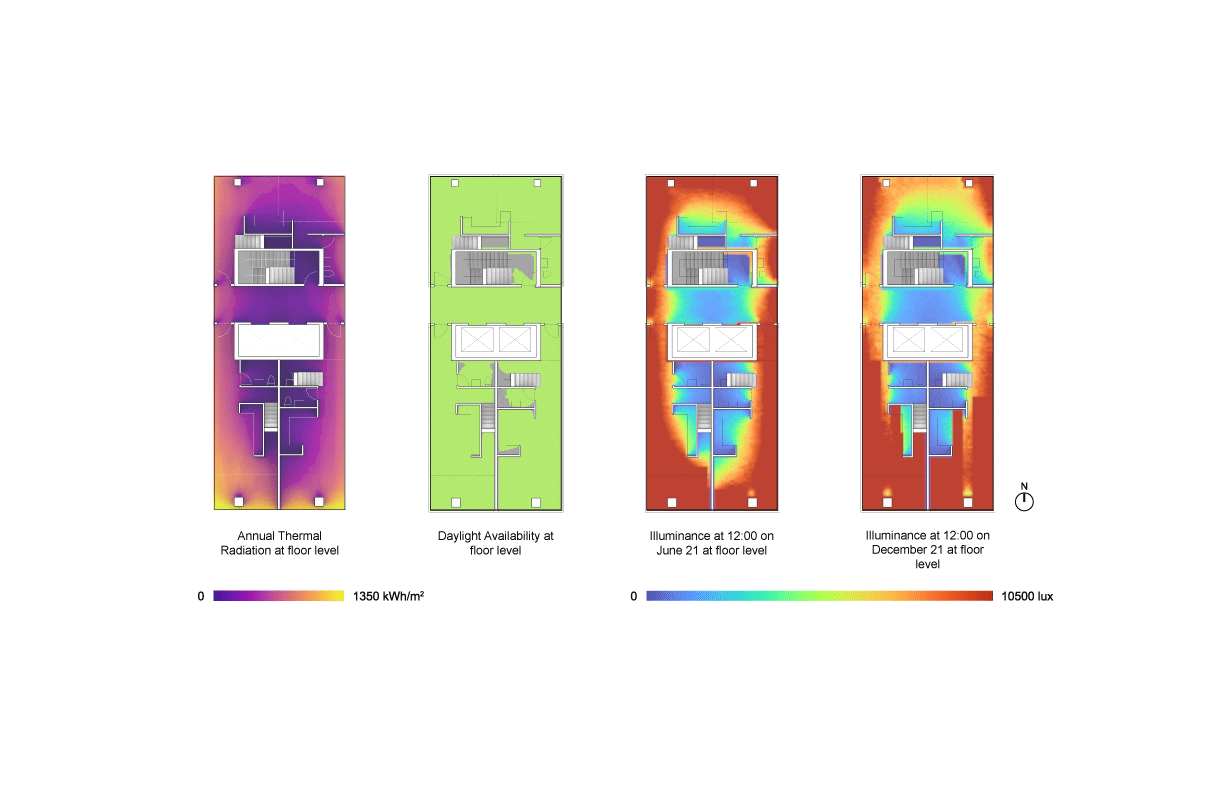
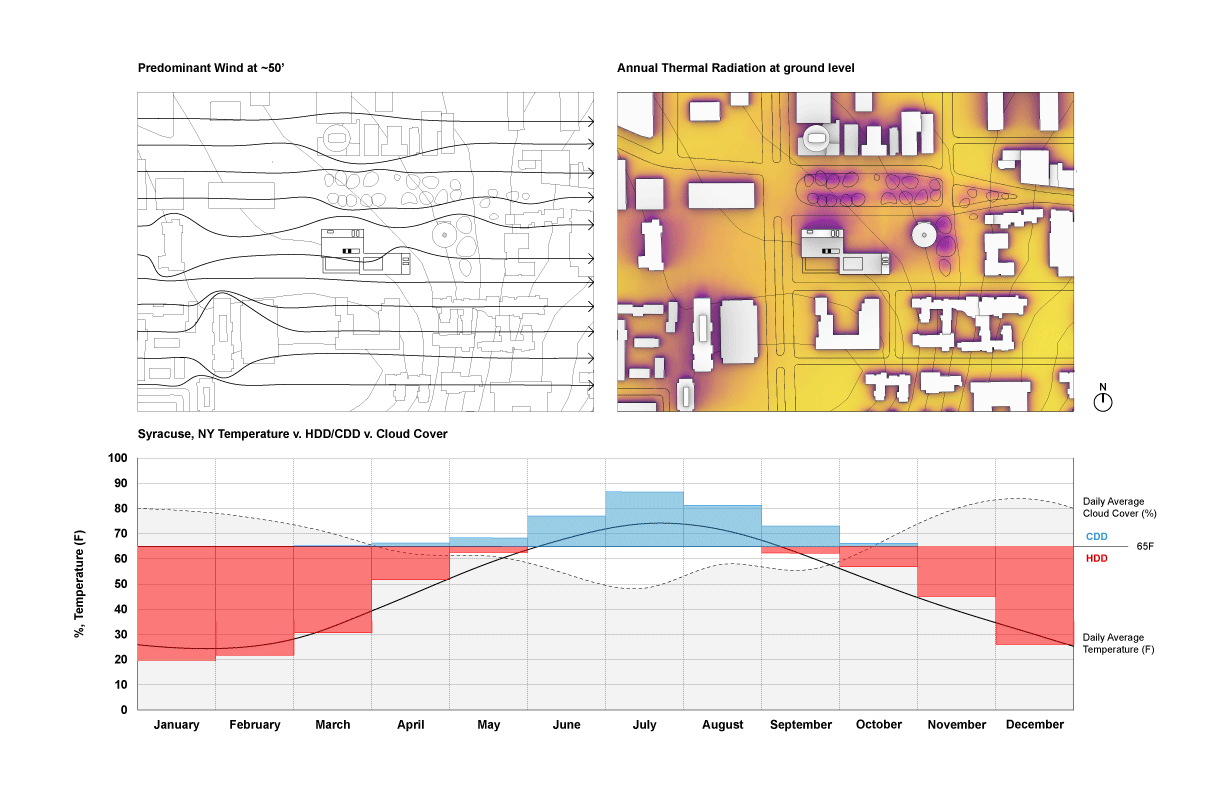
The Forman Park Towers project from Fall 2025 featured a full curtain wall facade to maximize solar heat gain, a strategy that risked excessive solar heat gain, glare, and illuminance. This iteration aims to mitigate those conditions without increasing dependency on artificial light and mechanical heating systems, while also examining the embodied global warming potential of the specified materials.
Forman Park Towers
Forman Park, Syracuse, NY
Fall 2025
Architectural Design V
Syracuse University
Architectural Design V
Syracuse University
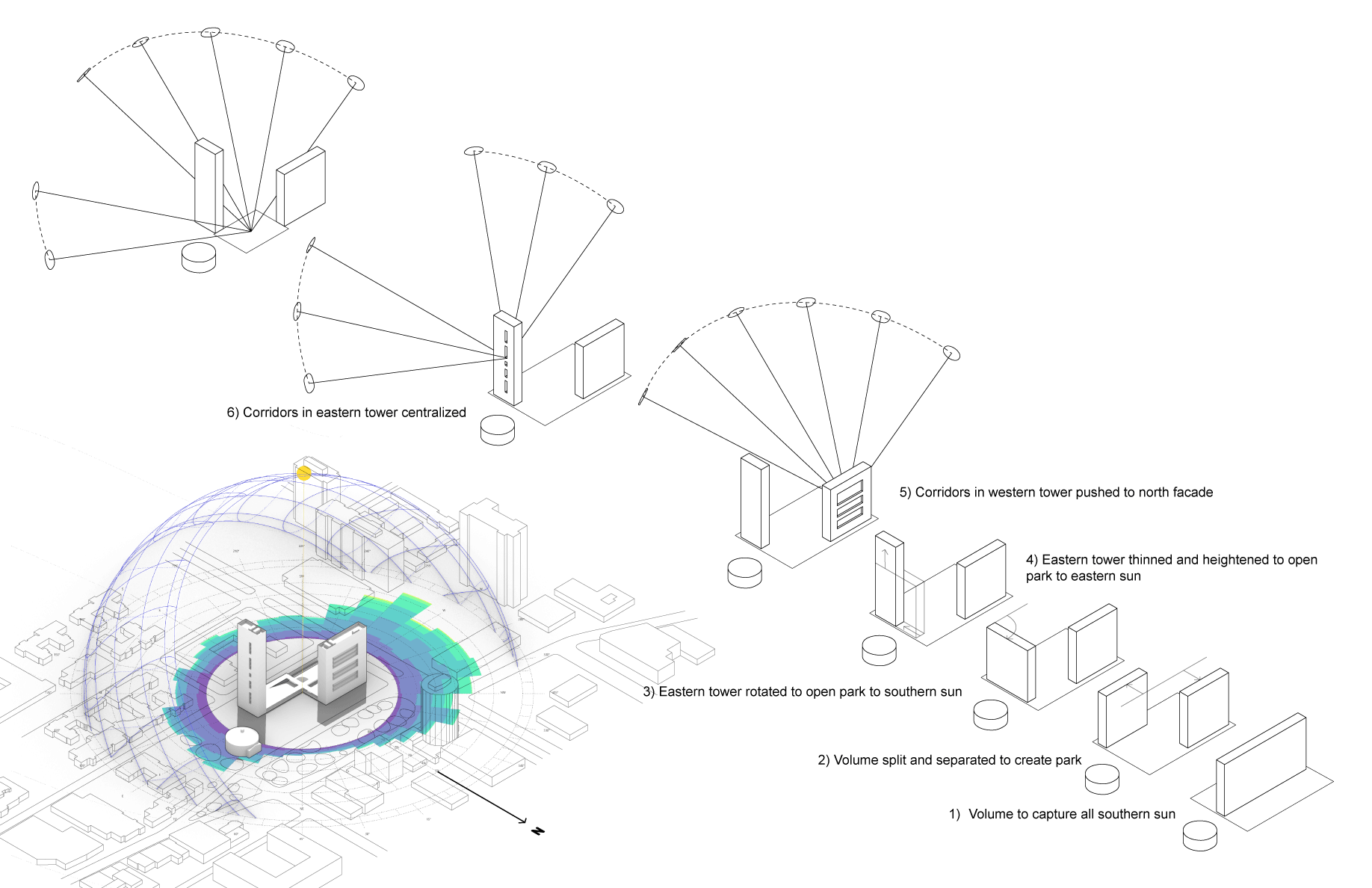
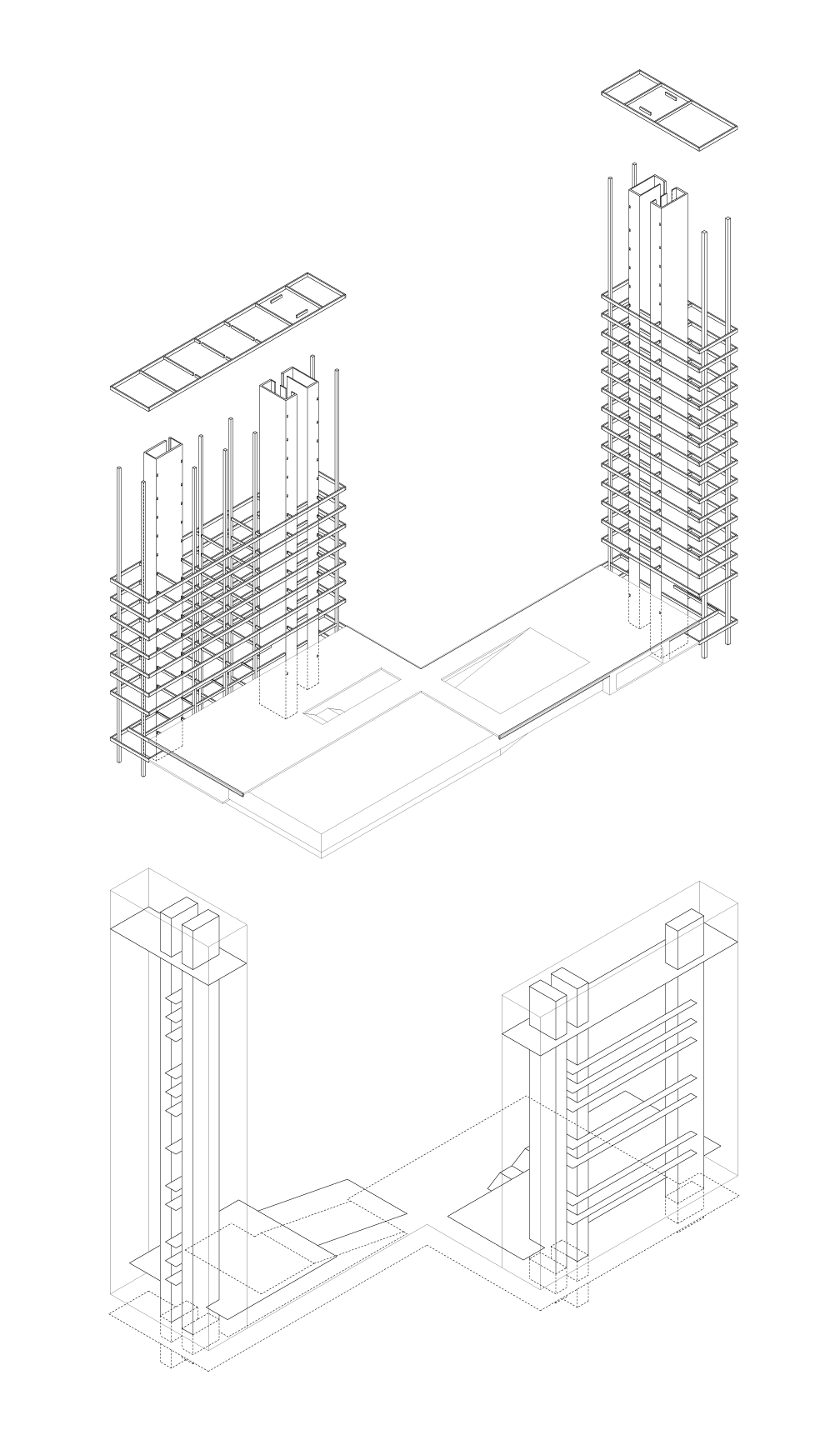
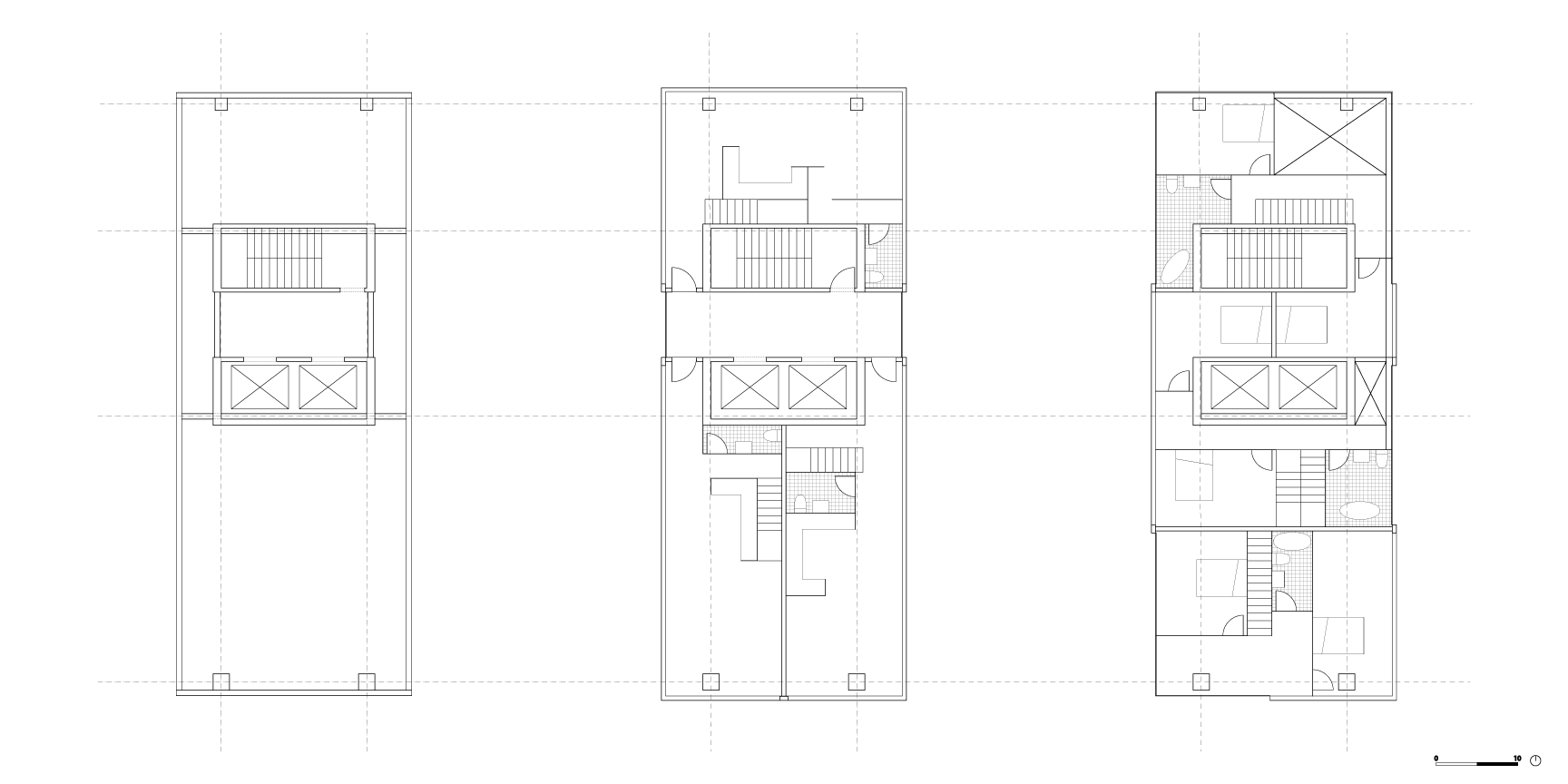
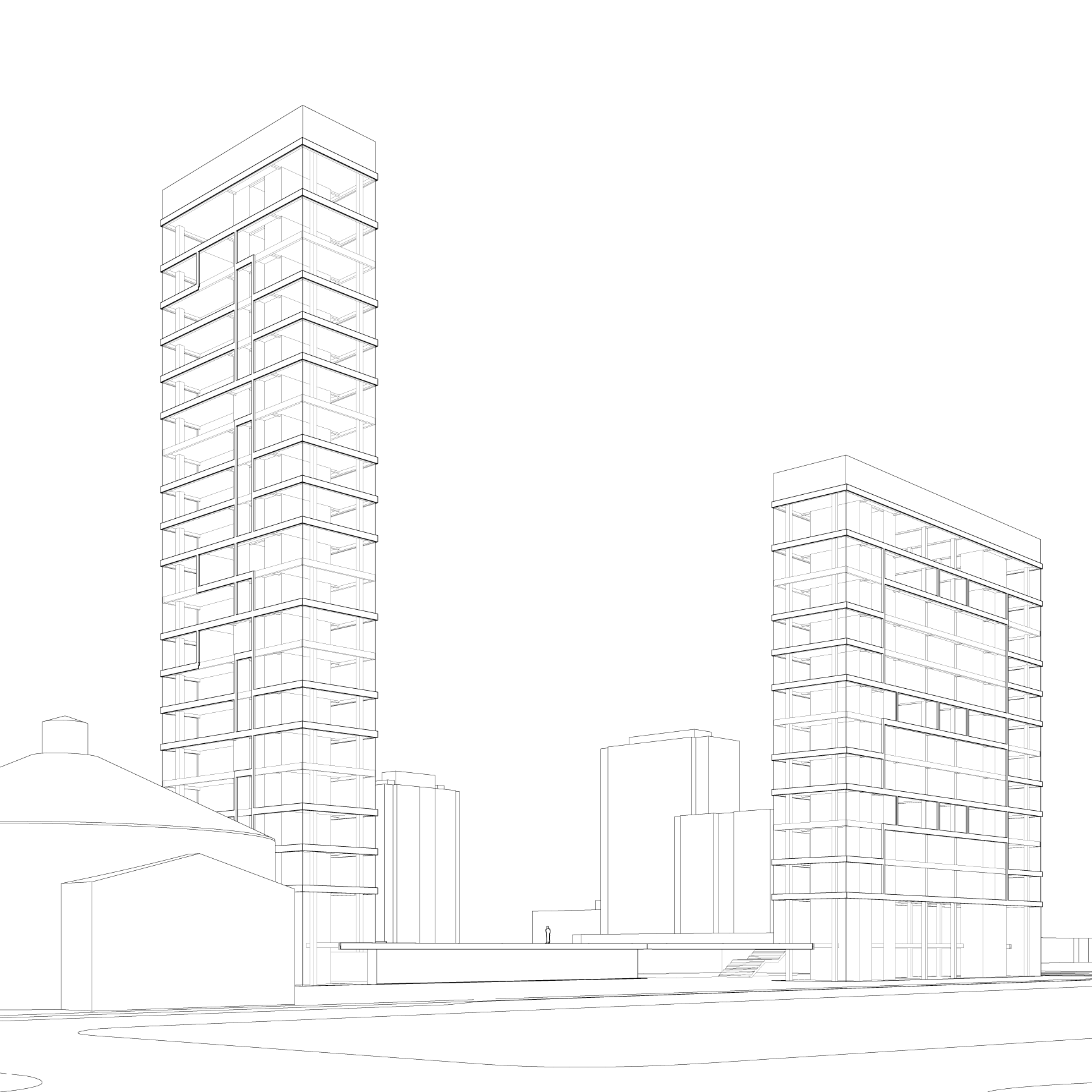
The Forman Park Towers propose apartments along Almond St., which runs beneath the I-81 viaduct in Syracuse, a section of elevated highway being demolished as part of the NYSDOT I-81 Viaduct Project.
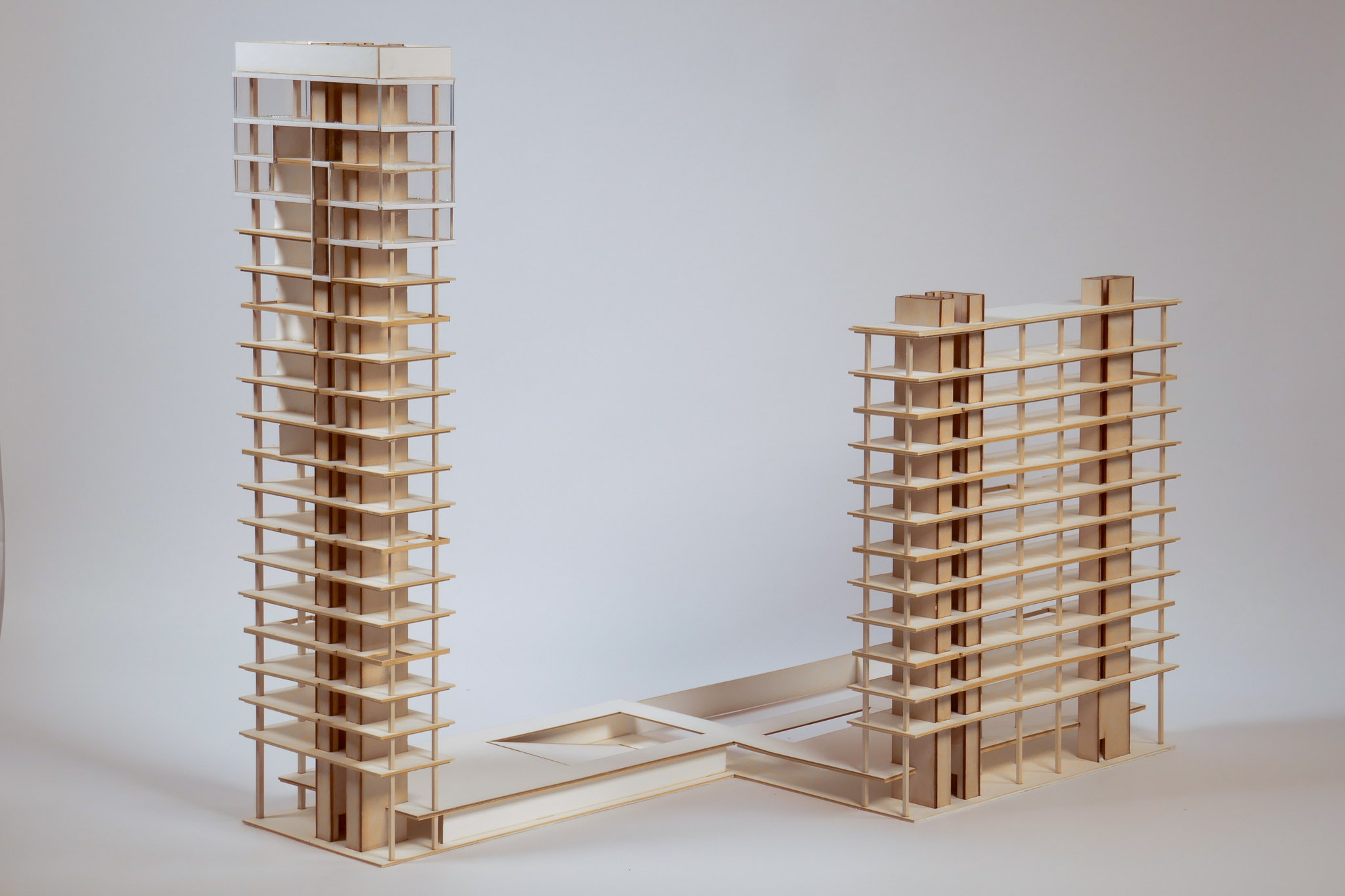
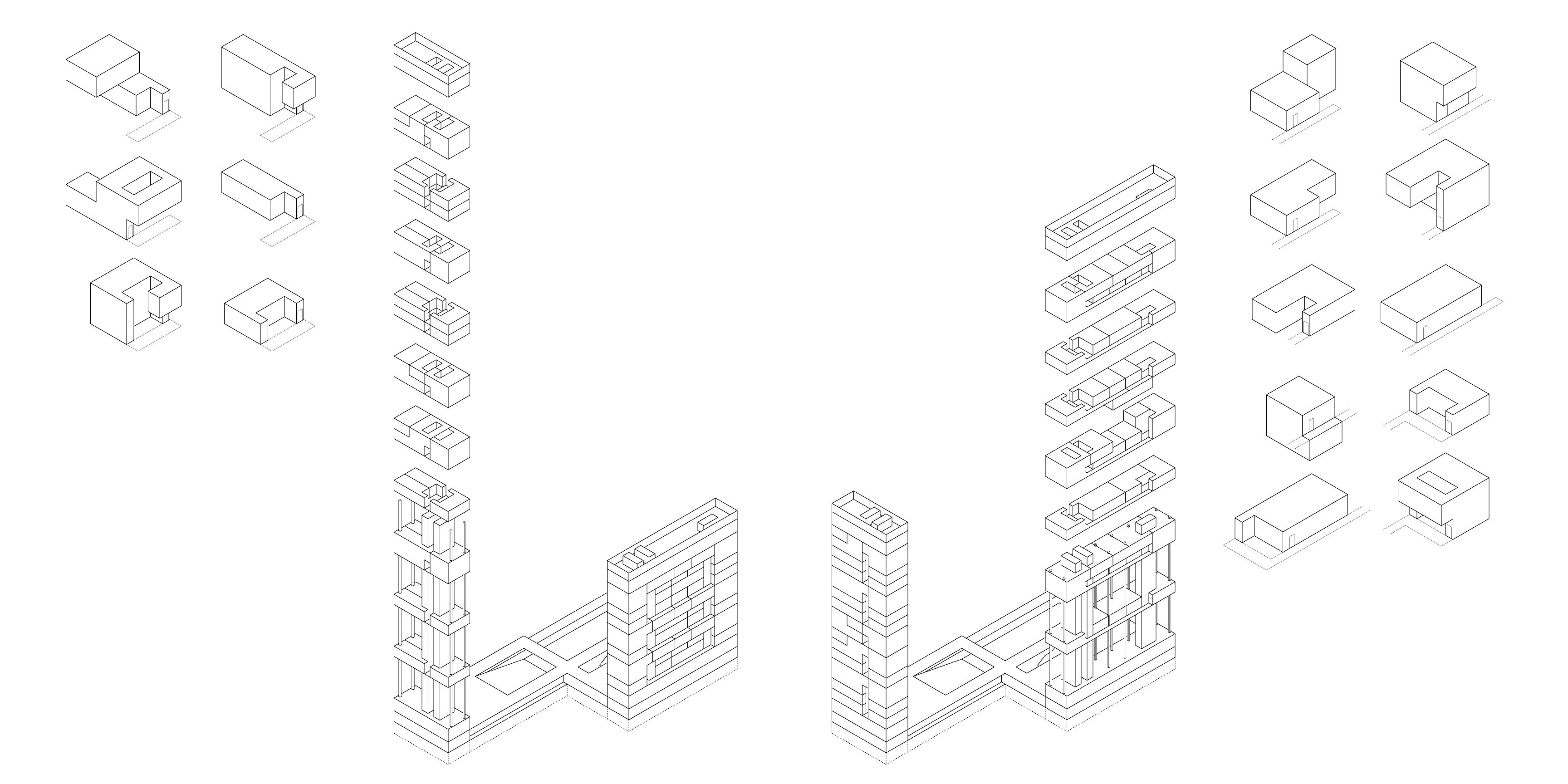
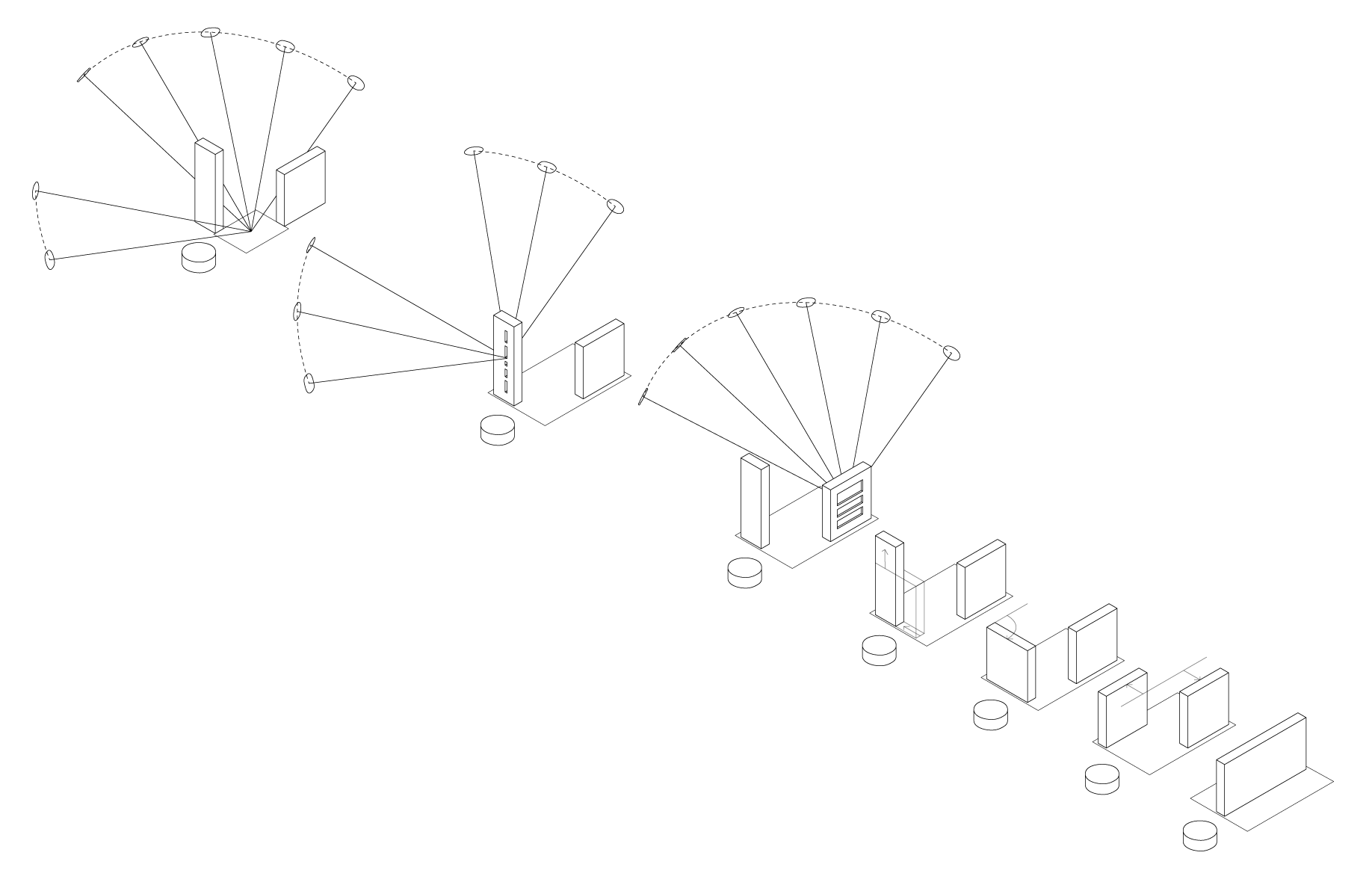
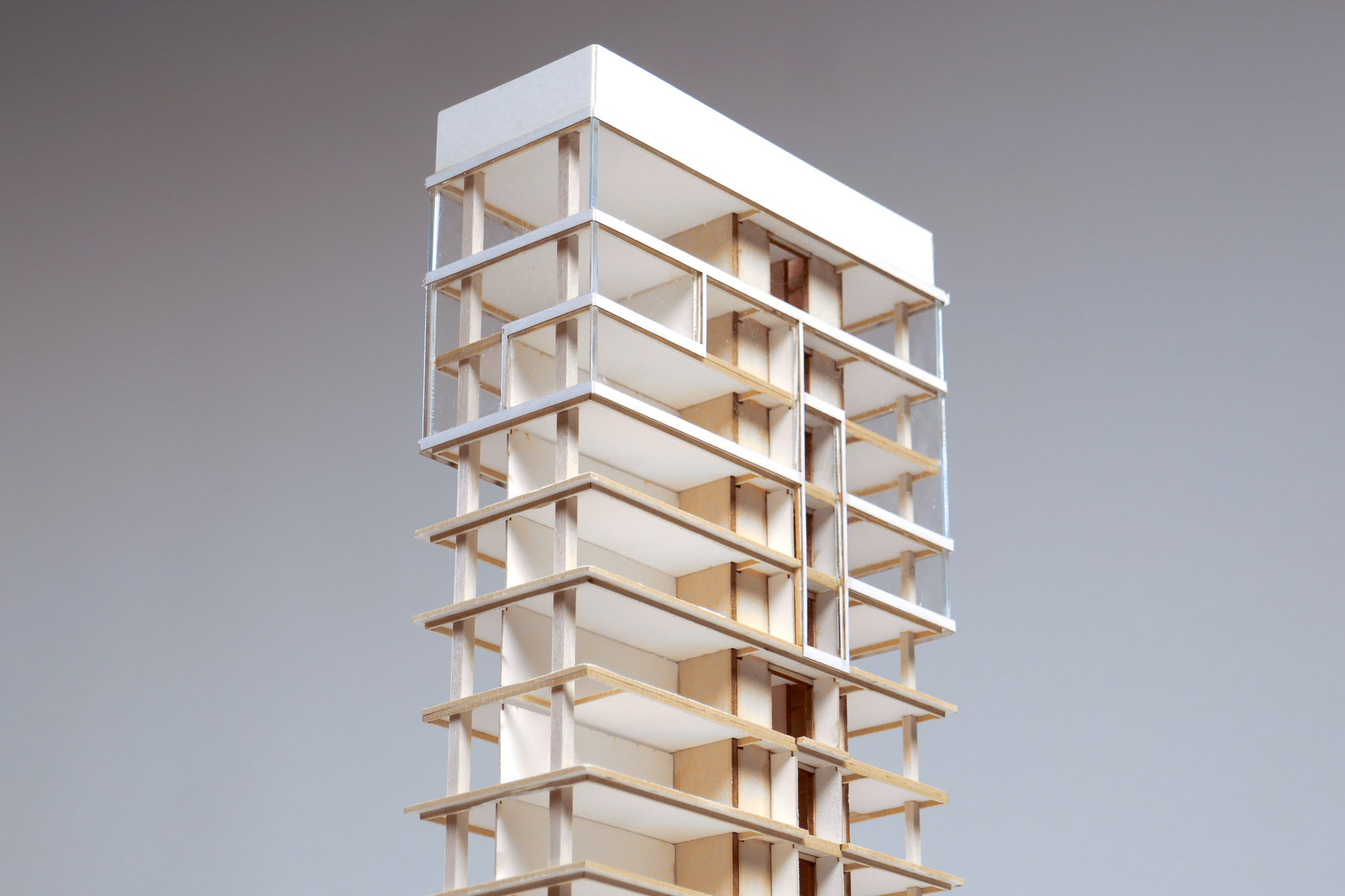
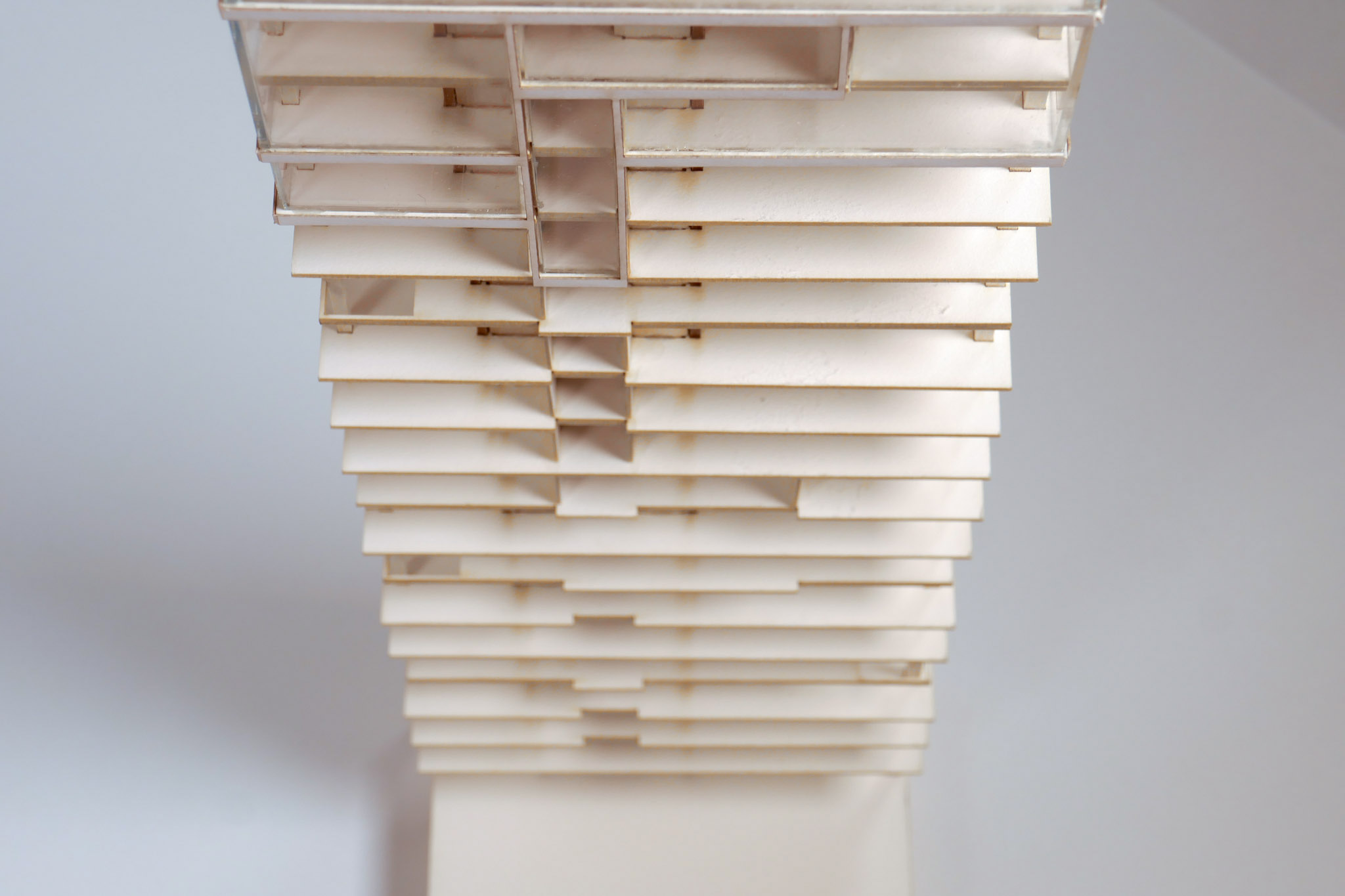
Apartments are divided into two towers, one lower with a wide southern facade, the other nearly twice the height with a narrow southern facade and wider eastern and western facades, trading broad southern sun exposure for sun from up to three directions. Certain floors in both towers are reserved for two-story apartments that wrap over each other and over the corridors on the floors below, eliminating corridors altogether on the floor above, increasing facade exposure per unit, and creating opportunities for double-height spaces. Both towers' facades express the arrangement of units by cantilevering floor plates to outline each unit.
Apartments are divided into two towers, one lower with a wide southern facade, the other nearly twice the height with a narrow southern facade and wider eastern and western facades, trading broad southern sun exposure for sun from up to three directions. Certain floors in both towers are reserved for two-story apartments that wrap over each other and over the corridors on the floors below, eliminating corridors altogether on the floor above, increasing facade exposure per unit, and creating opportunities for double-height spaces. Both towers' facades express the arrangement of units by cantilevering floor plates to outline each unit.
Precedent Study and Adaptation: PREVI
James Stirling, 1969
Lima, Peru
Lima, Peru
Fall 2025
Architectural Design V
Syracuse University
Architectural Design V
Syracuse University
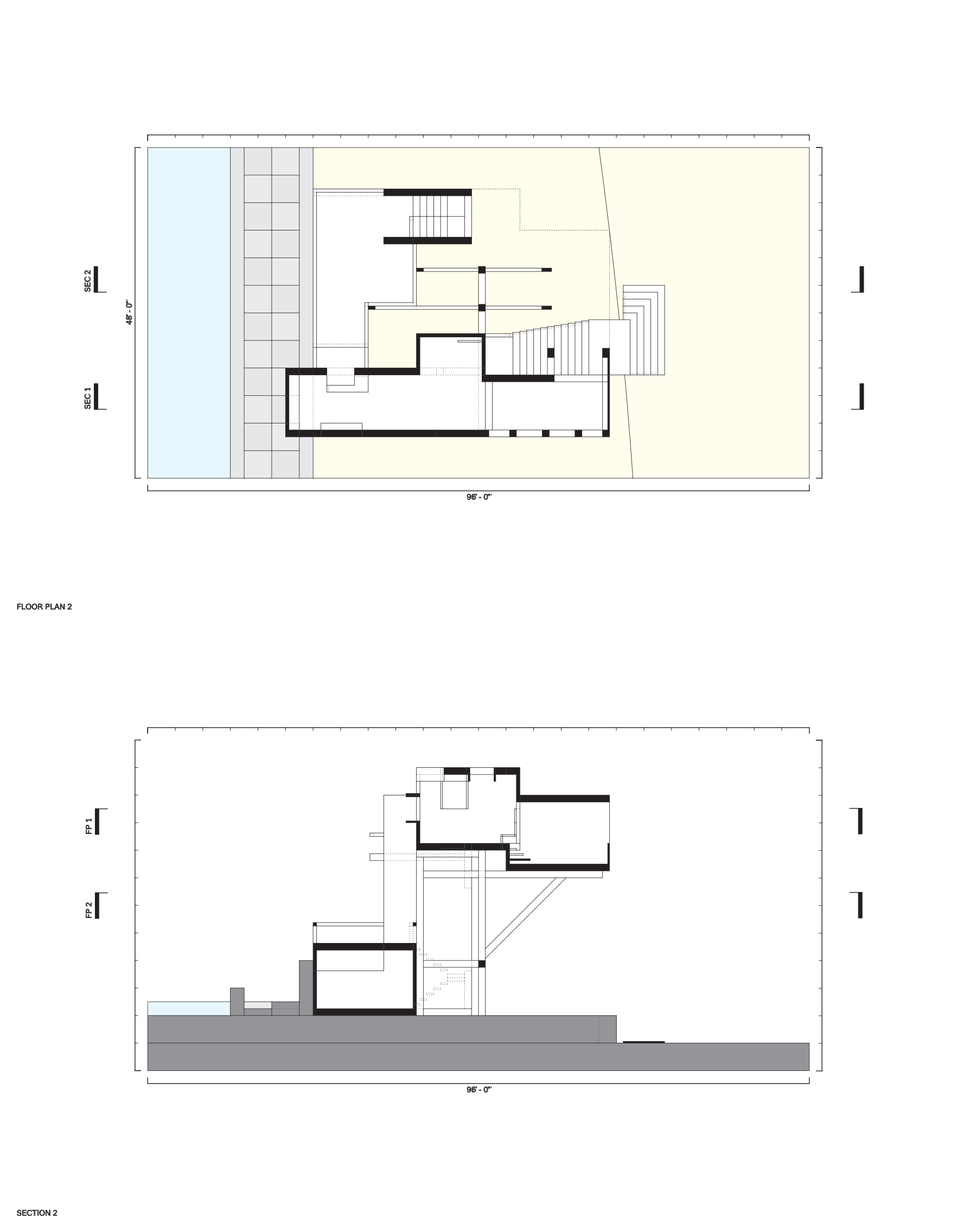
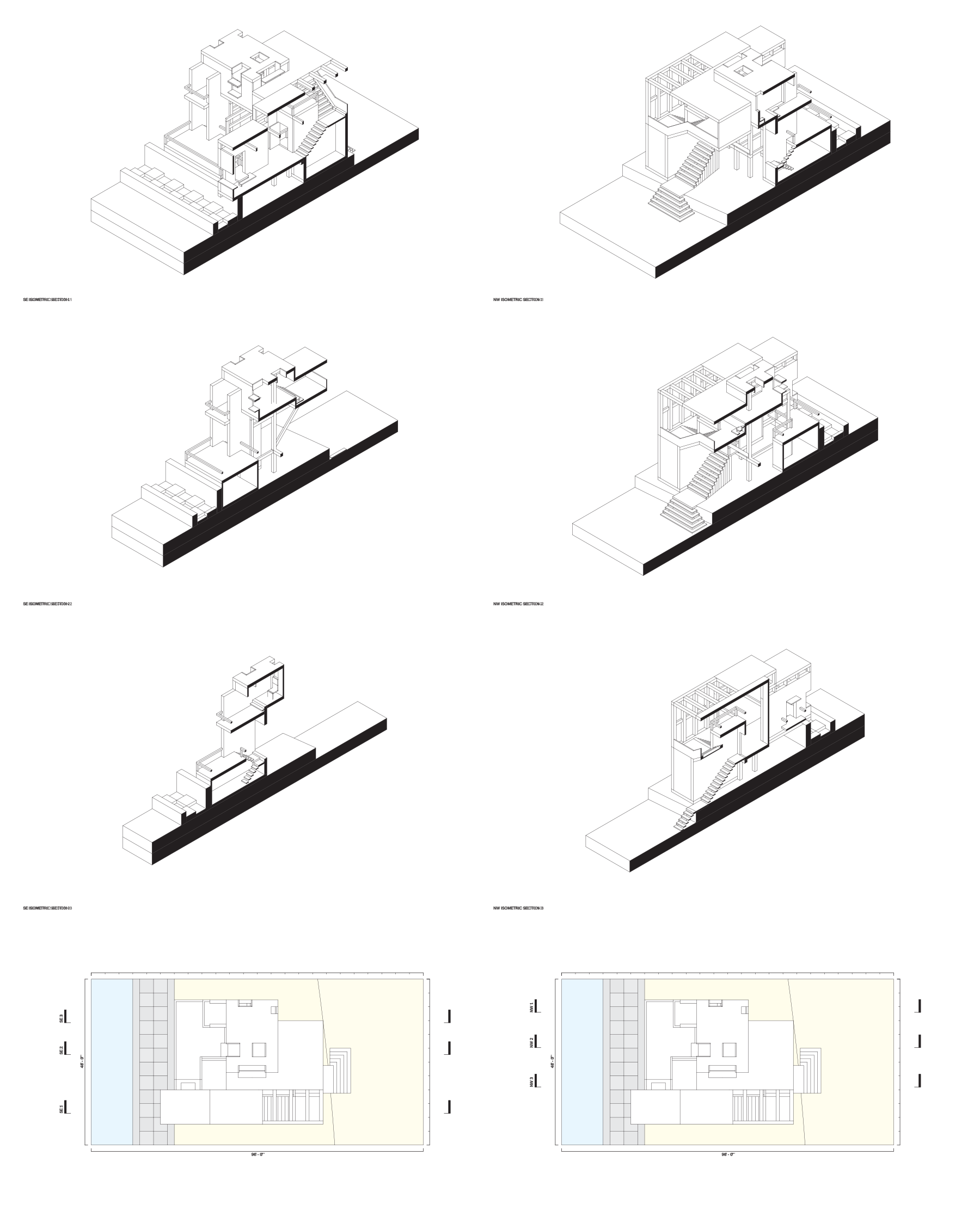
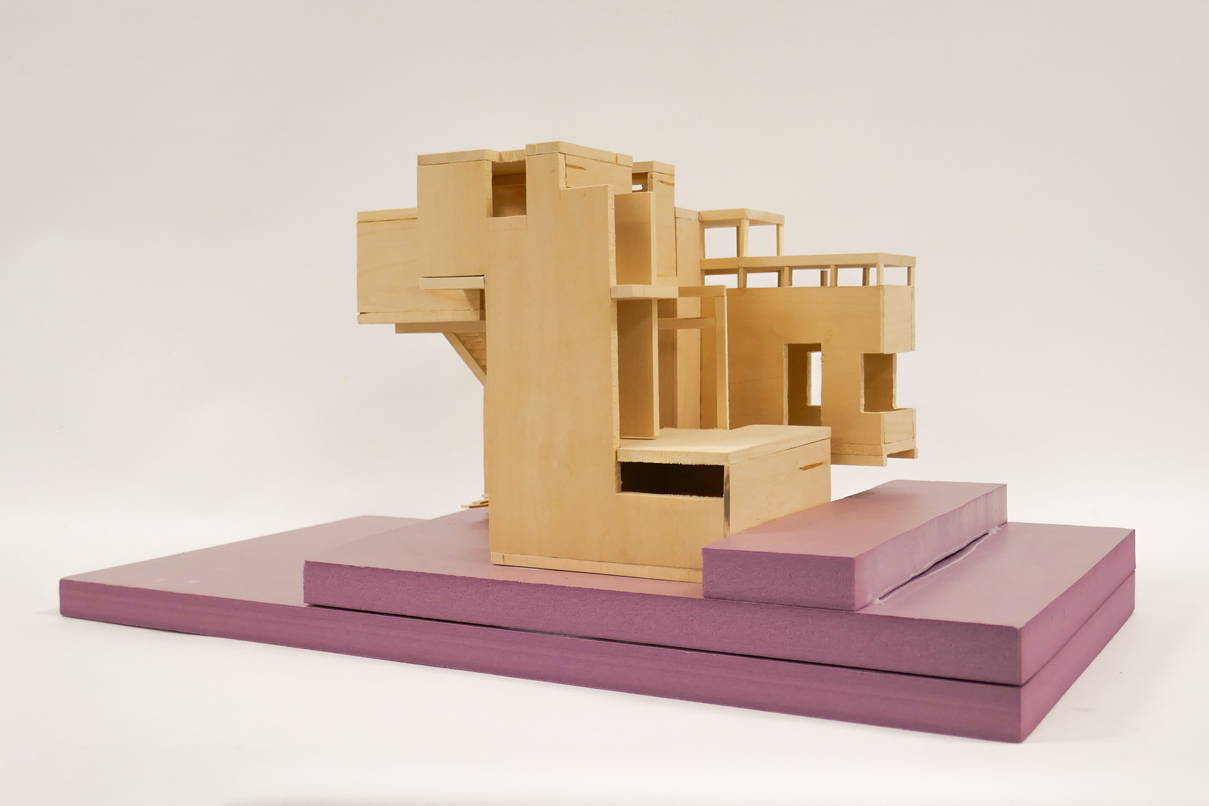
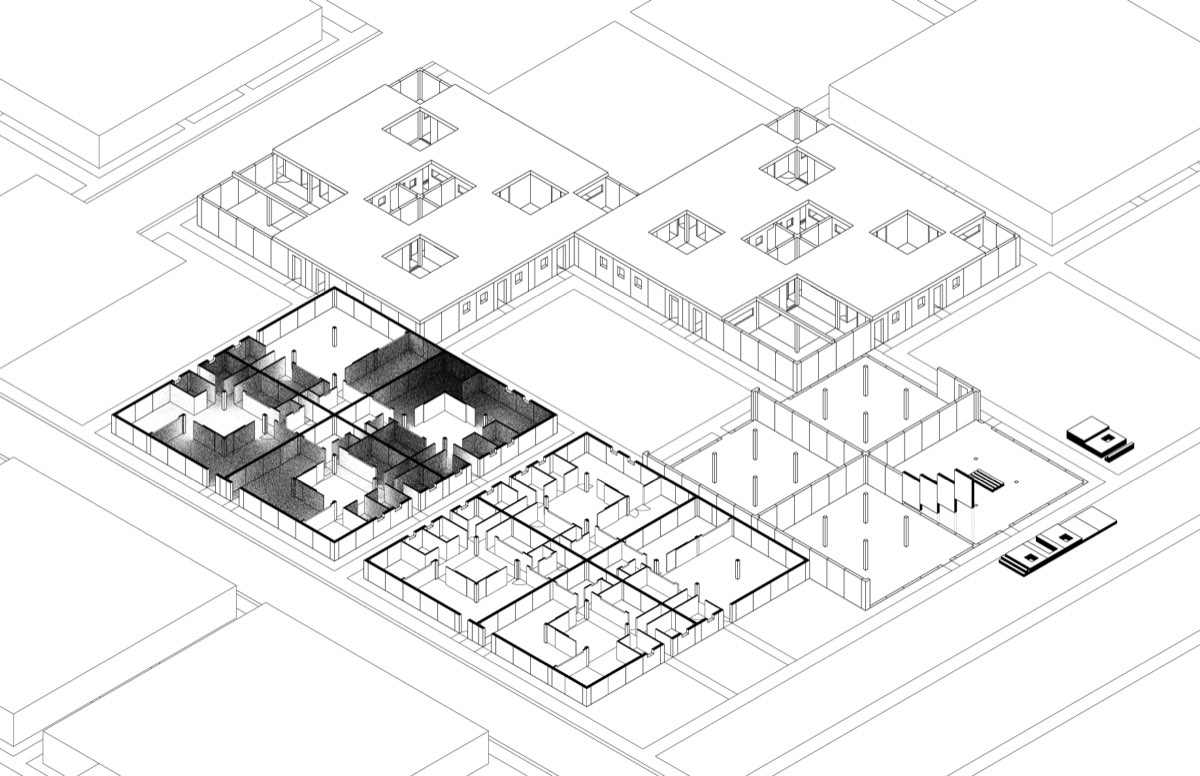
James Stirling's contribution to the Proyecto Experimental de Vivienda (PREVI) comprised prefabricated, low-cost units designed for expansion and versatile configuration. Built in groups of four sharing major walls and centralized plumbing, each unit's rooms were organized around a private central courtyard. Groups of four could then be duplicated and arranged into neighborhoods around larger, shared courtyards.
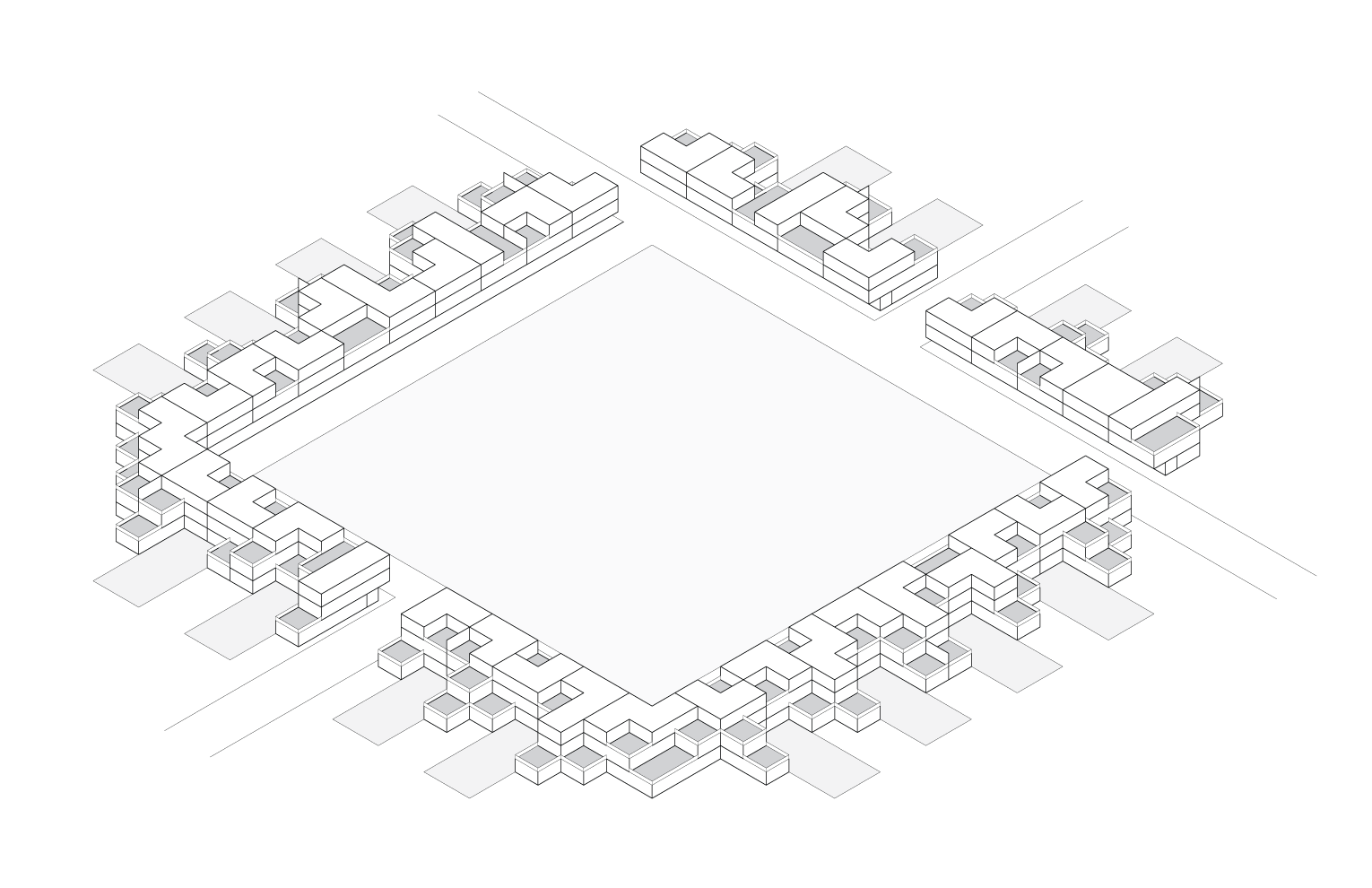
I adapted Stirling's PREVI units for a higher density context around an urban square, challenged by retaining key elements more feasible in suburban contexts, such as private courtyards in each unit, local courtyards for groups of units, and room for expansion and various configurations within each unit.
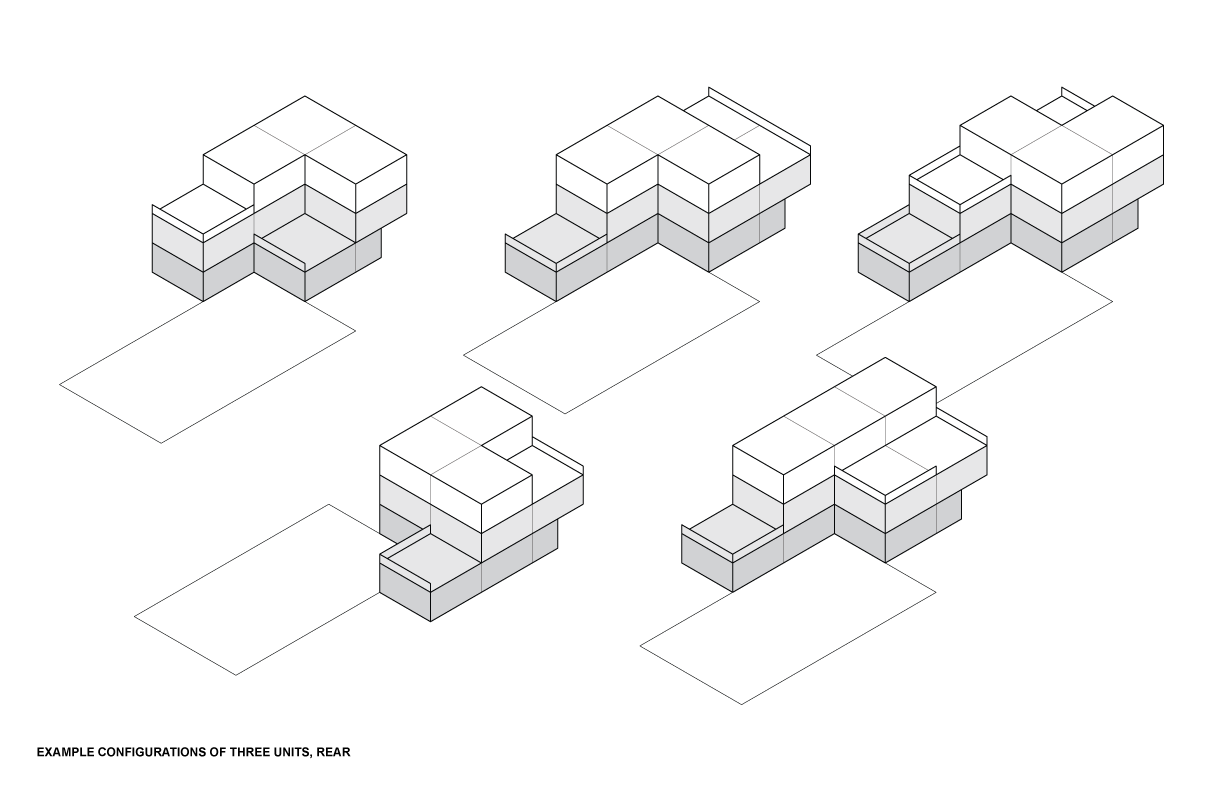
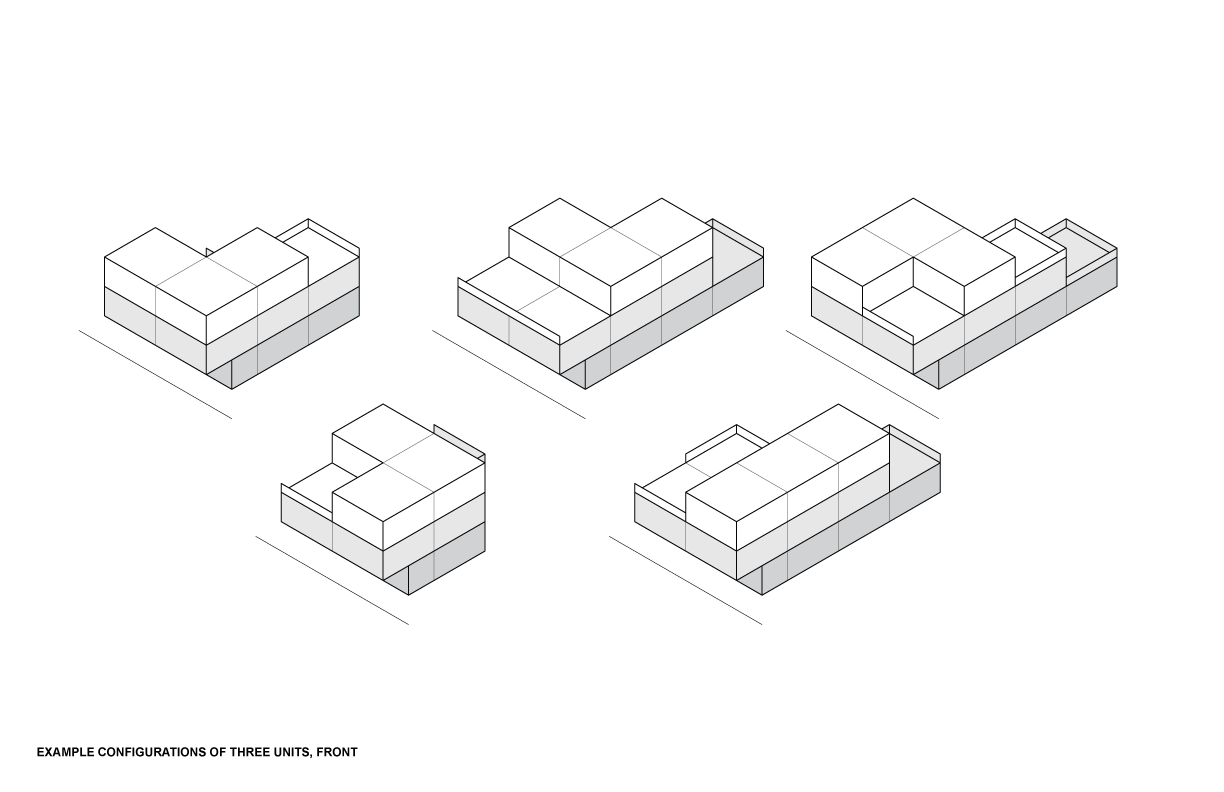
Units occupy one of three floors, each allocated one or two unobstructed courtyards built upon the excess space of the larger unit below, into which they can expand. Groups of six units share a larger, rear courtyard with the buildings behind, and all units are oriented around a central square.
Units occupy one of three floors, each allocated one or two unobstructed courtyards built upon the excess space of the larger unit below, into which they can expand. Groups of six units share a larger, rear courtyard with the buildings behind, and all units are oriented around a central square.
Truss Hut
Fall 2024
Building Systems I
Syracuse University
Building Systems I
Syracuse University
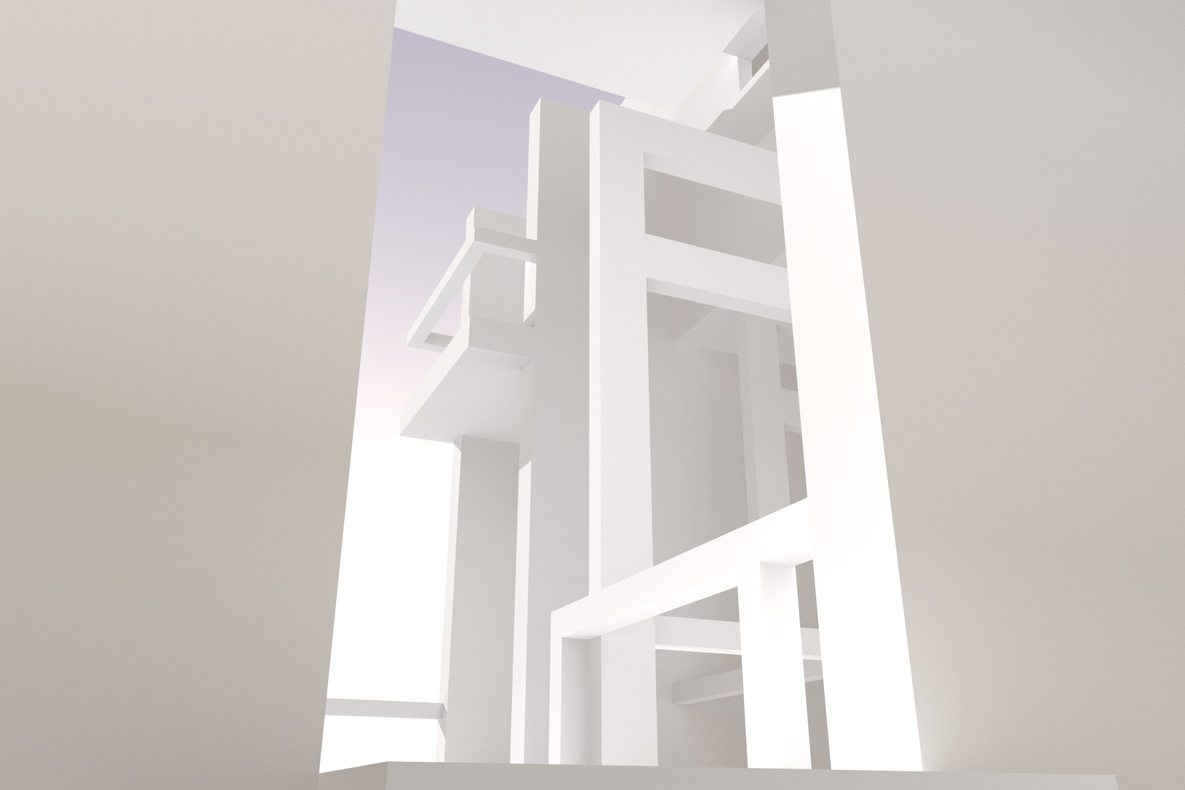

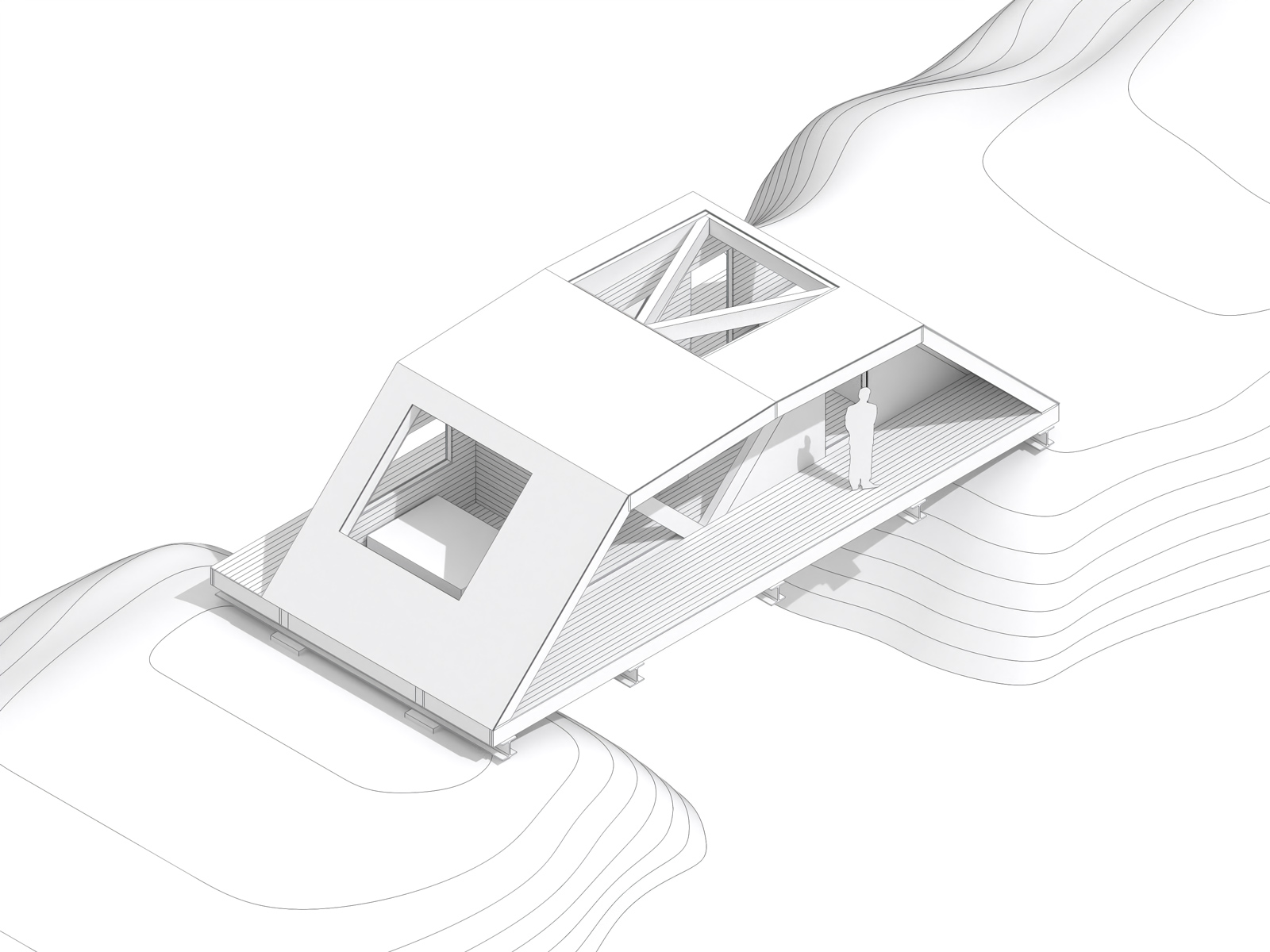
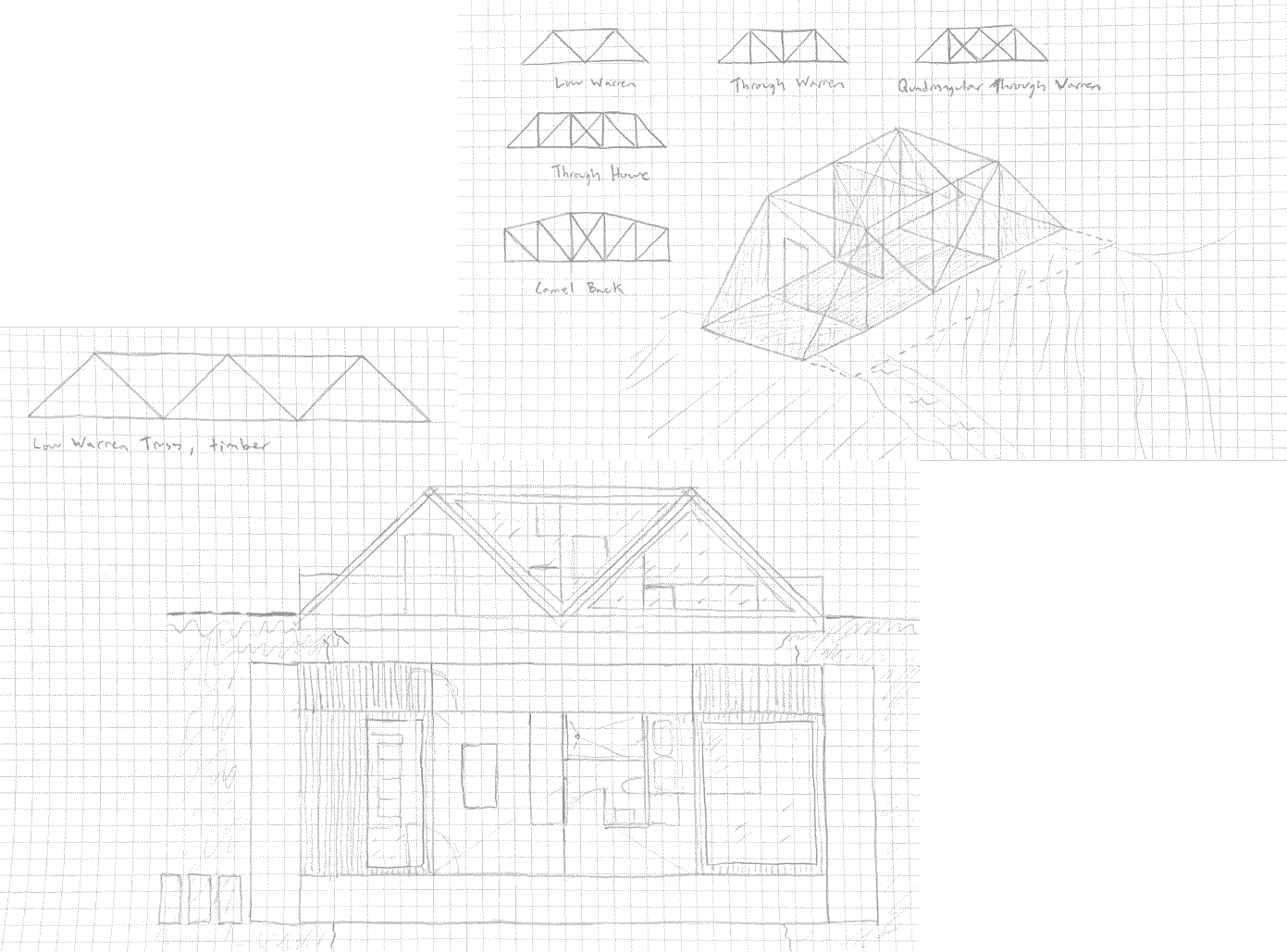
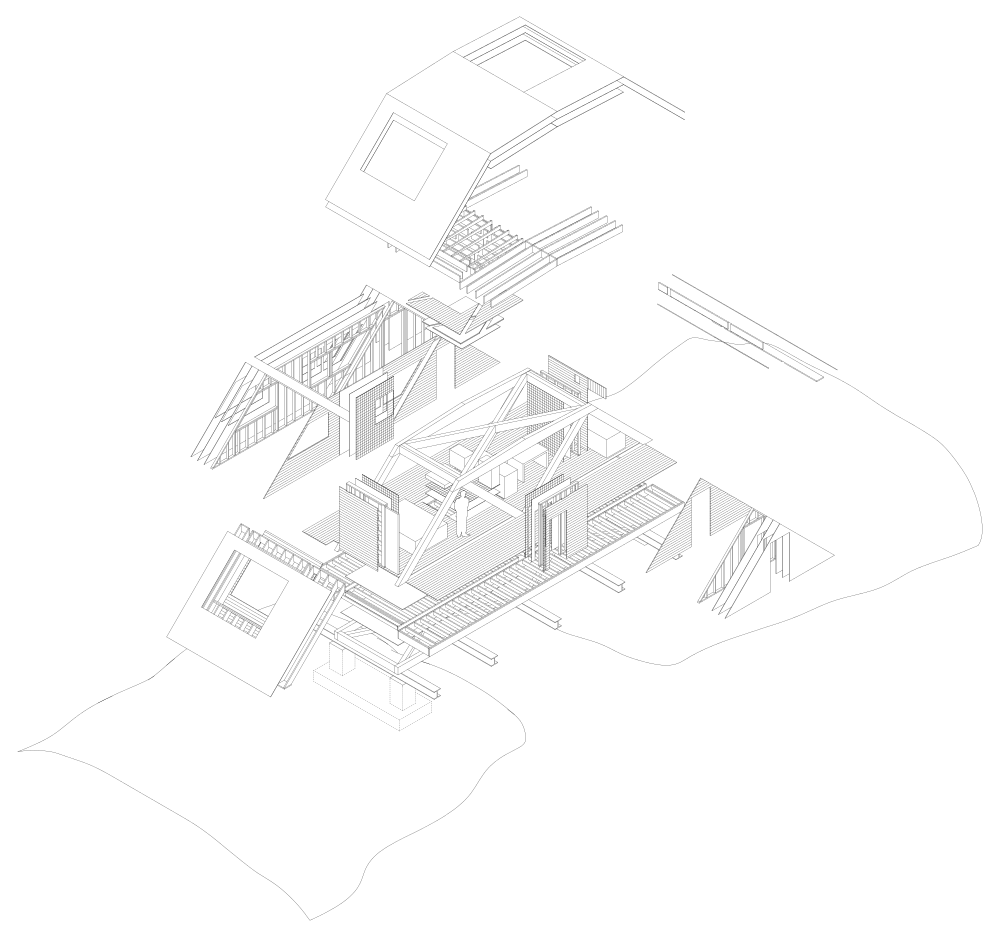
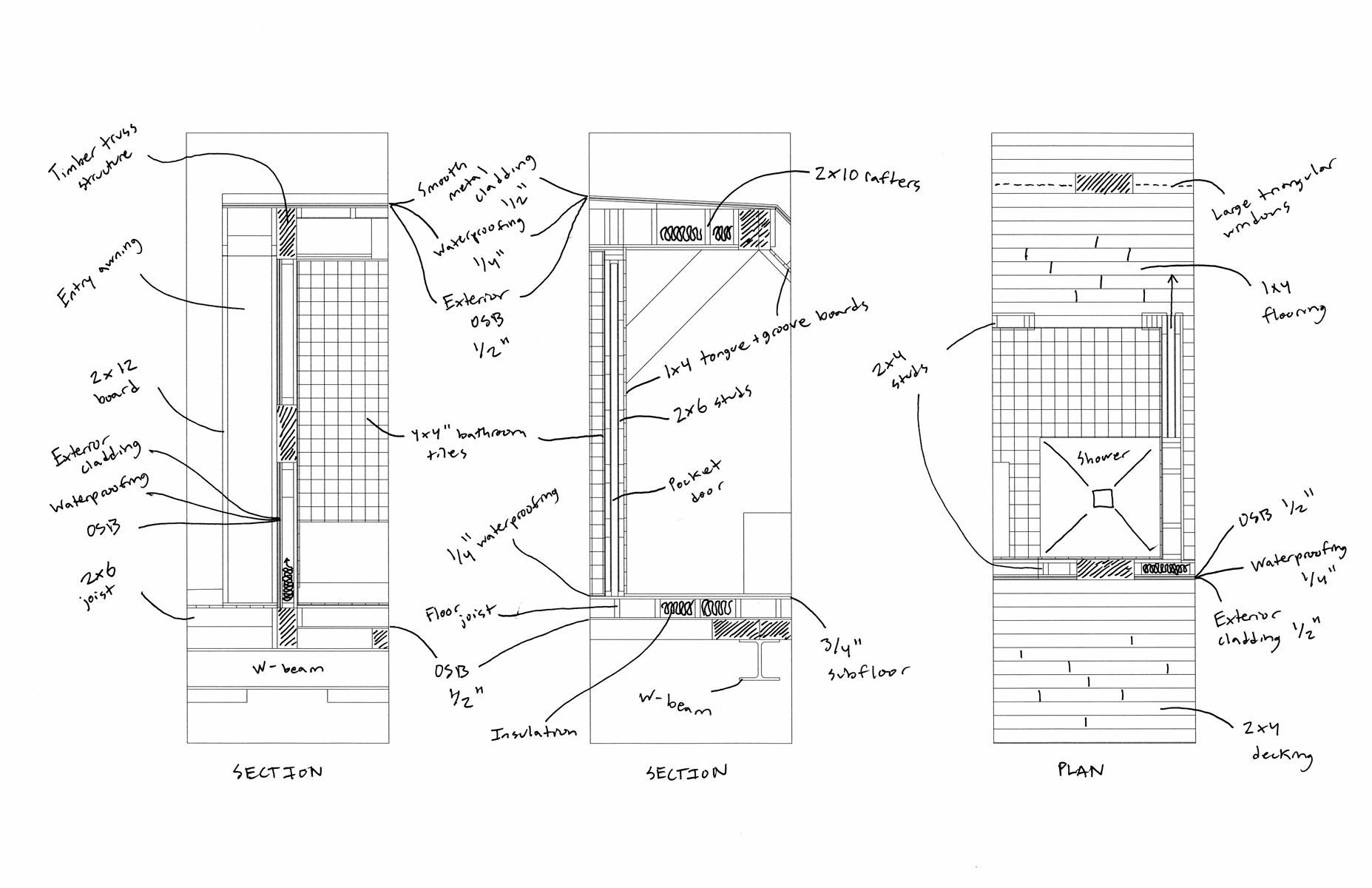
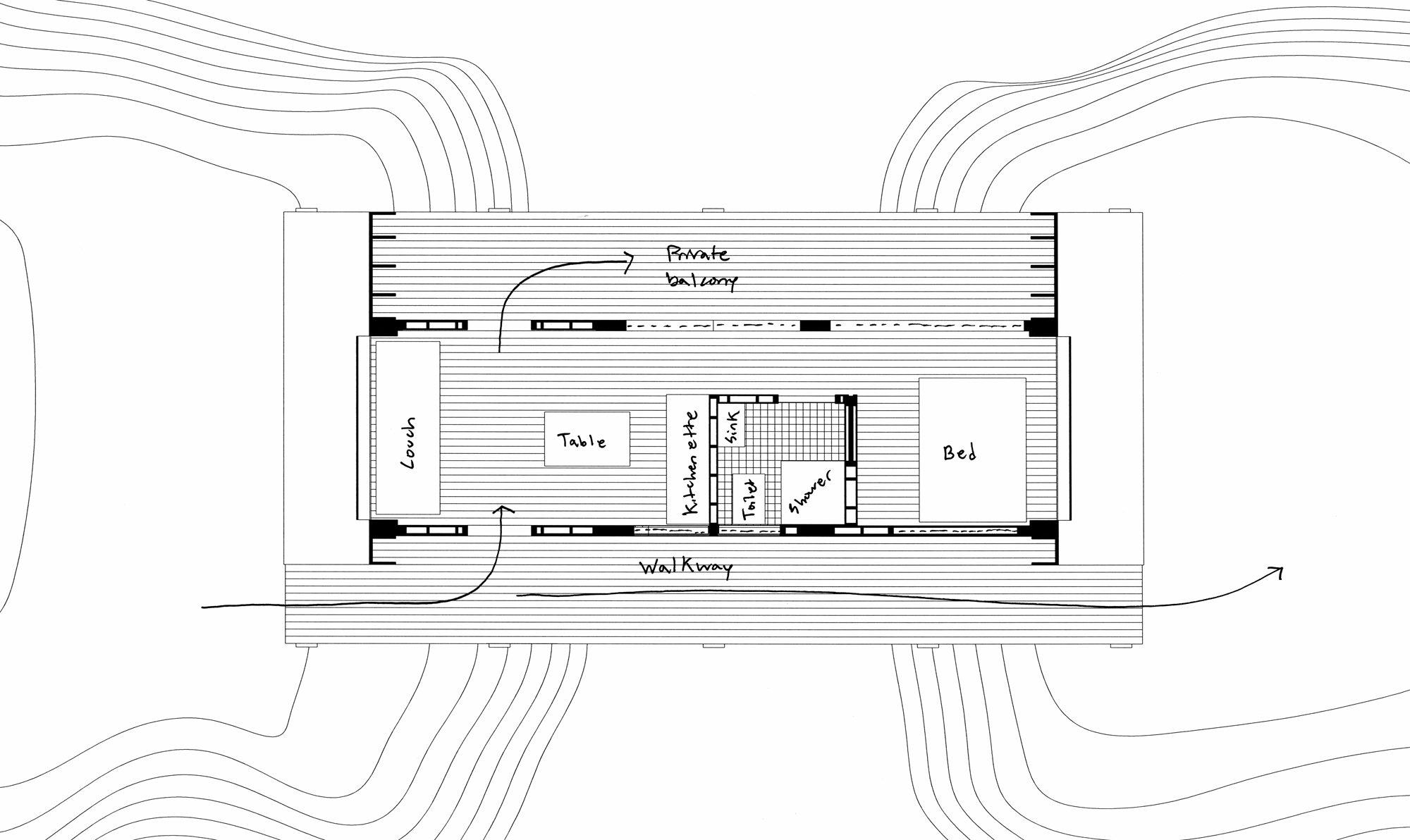
The Truss Hut is built into a timber Low Warren truss, selected for its structural efficiency and to maximize panel sizes to allow embedded doors and windows. Beams hung below the truss, perpendicular to the bottom chords, support the cantilevered walkway and private balcony.
Shell of Asclepius
Sanctuary of Asclepius at Epidaurus, Greece
Fall 2024
Architectural Design III
Syracuse University
Architectural Design III
Syracuse University
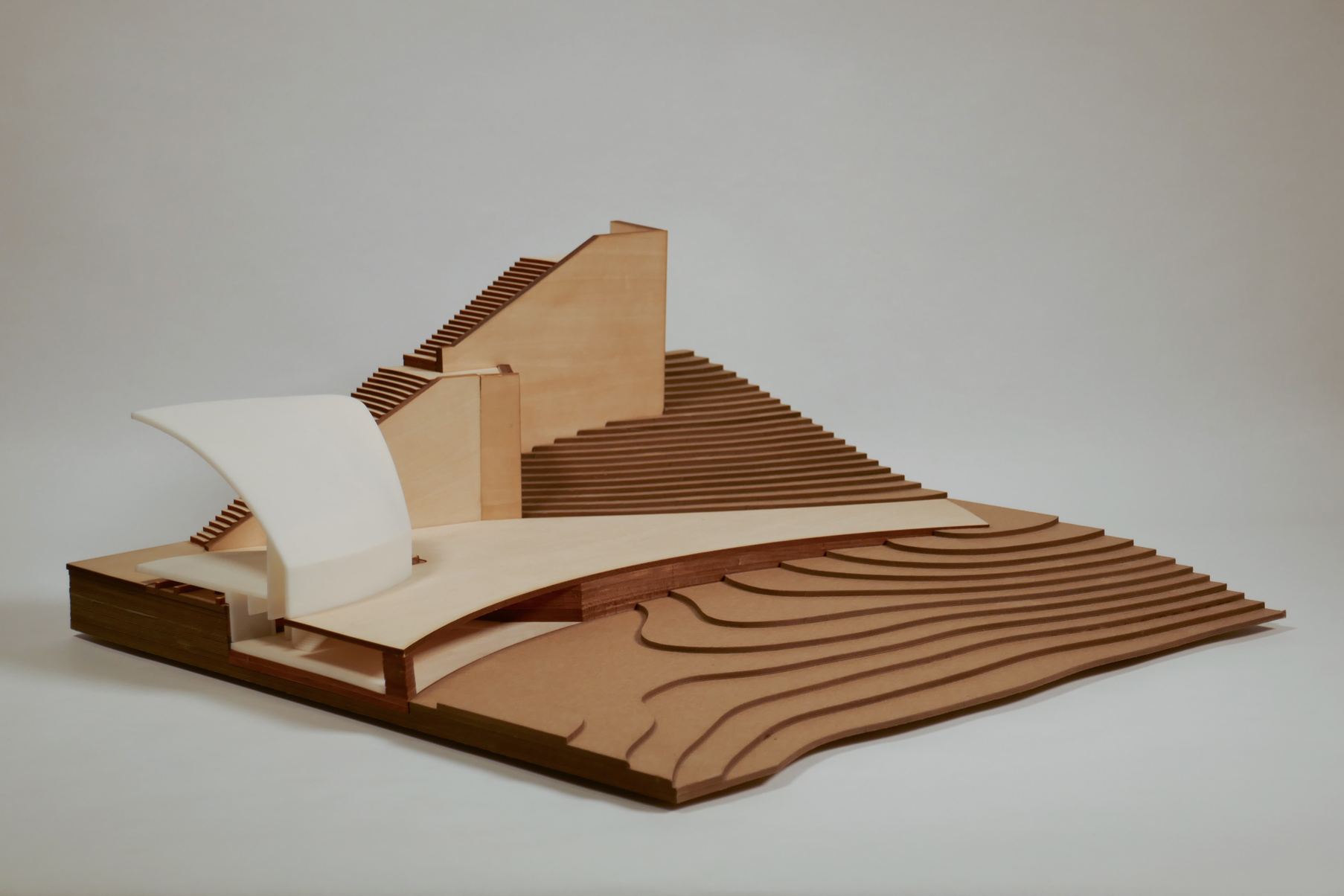
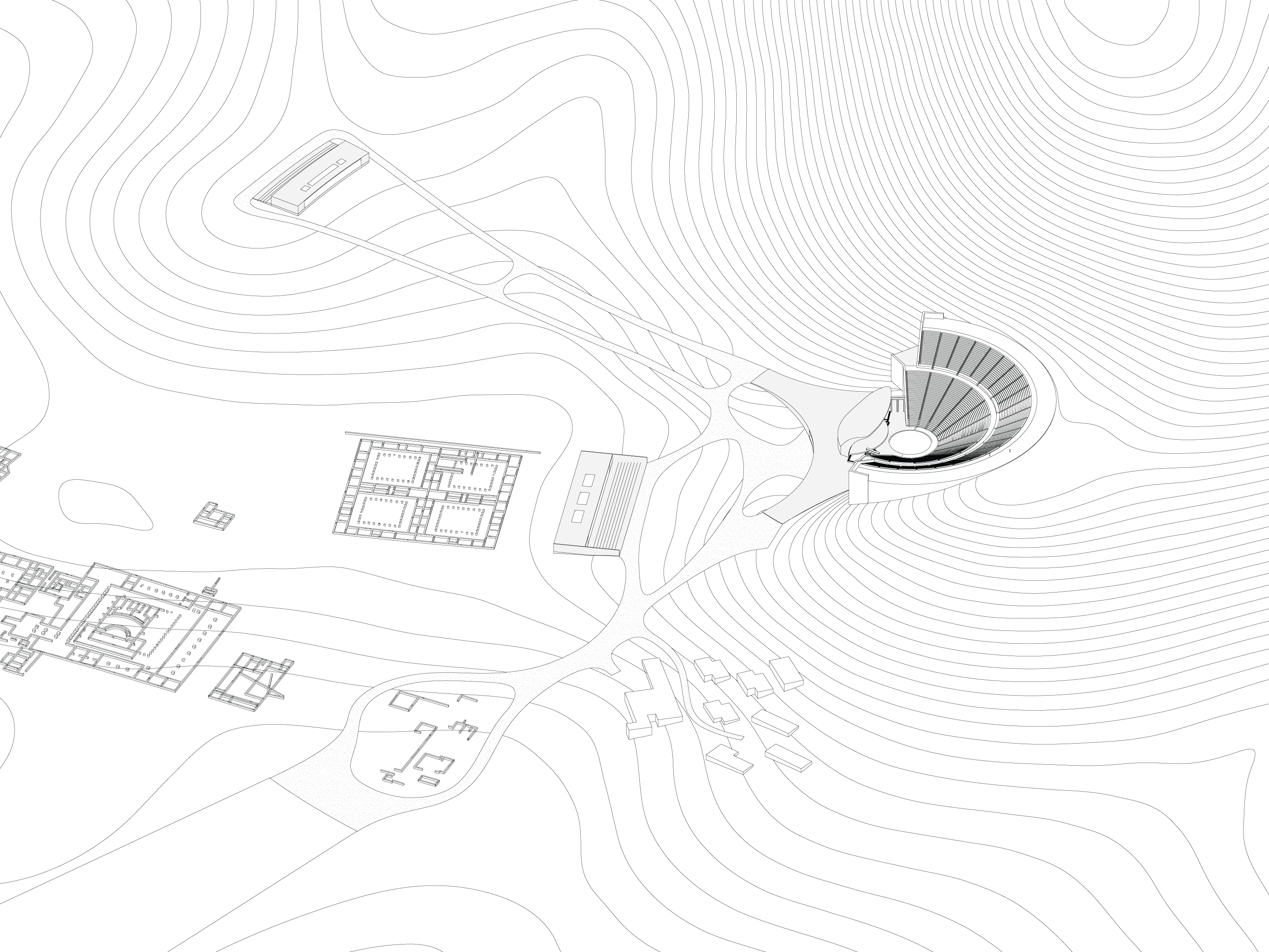
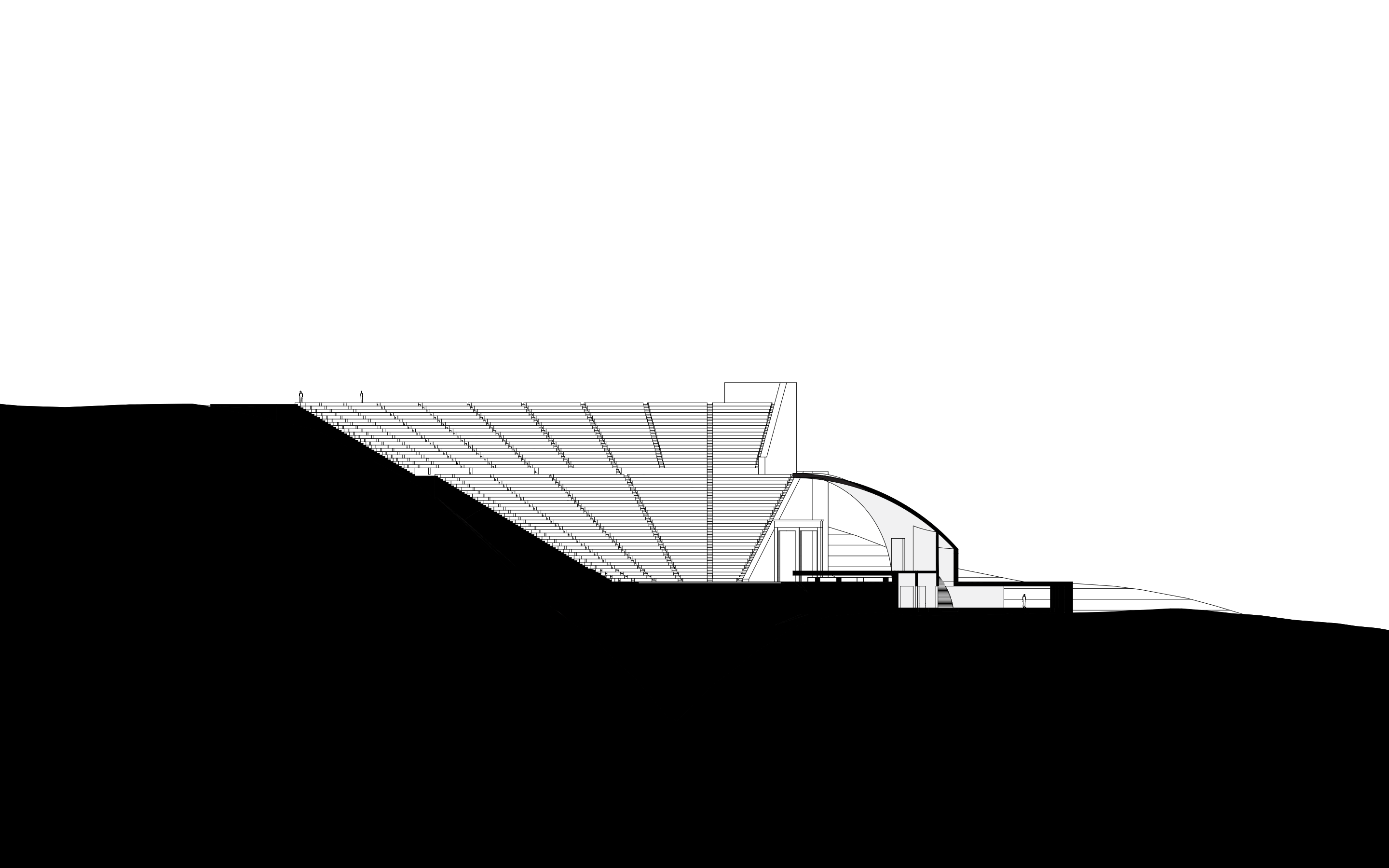
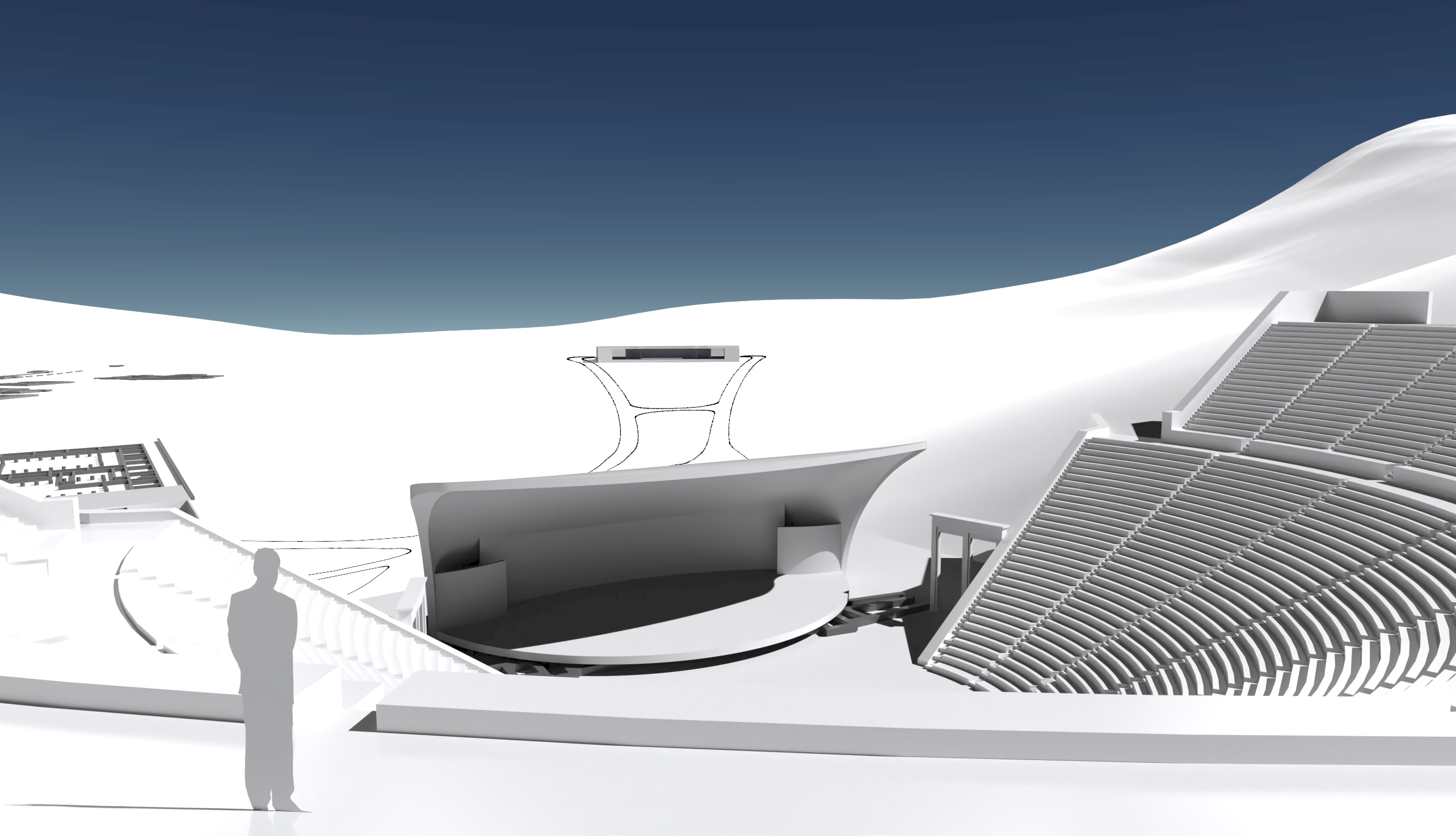
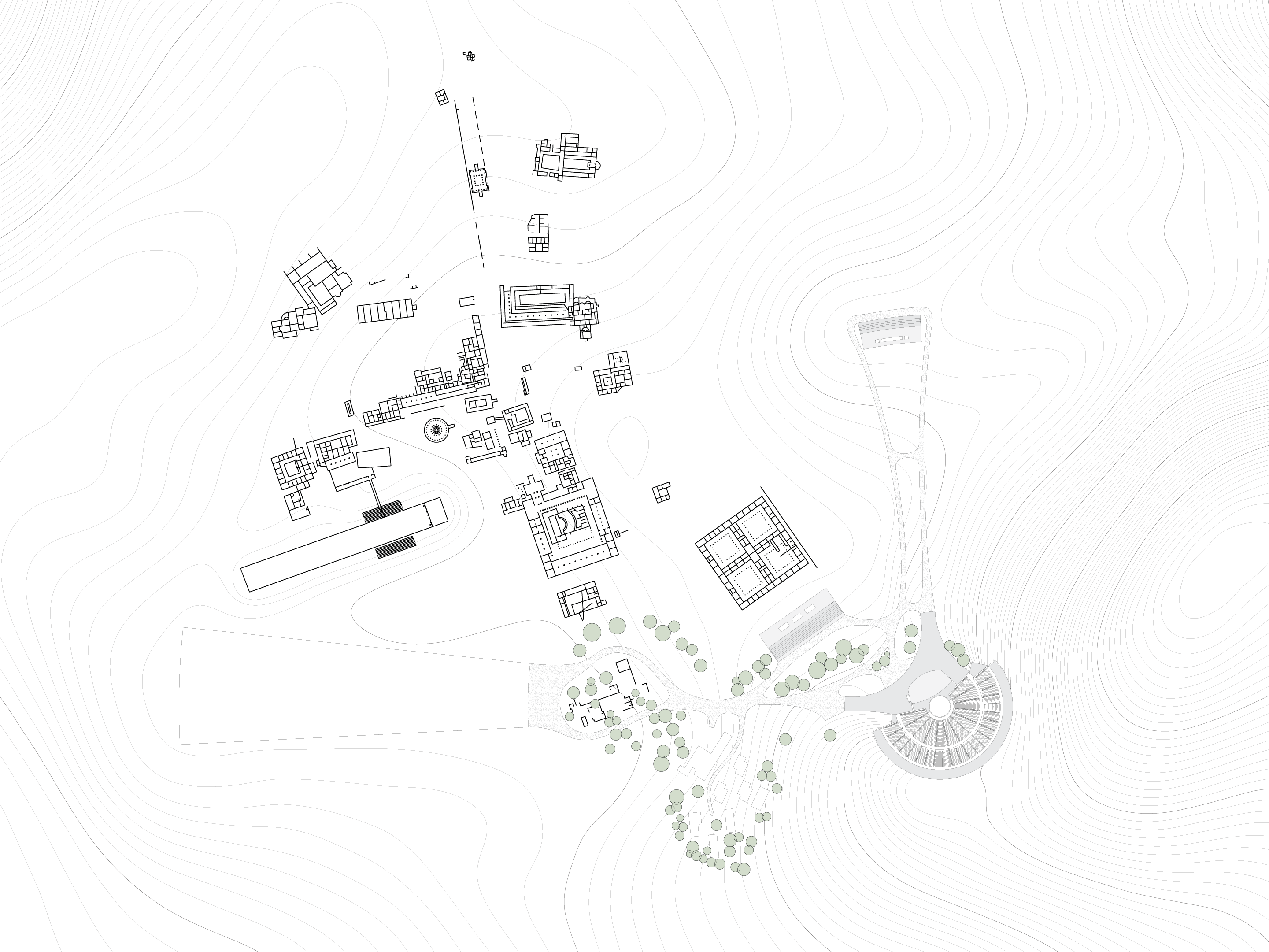
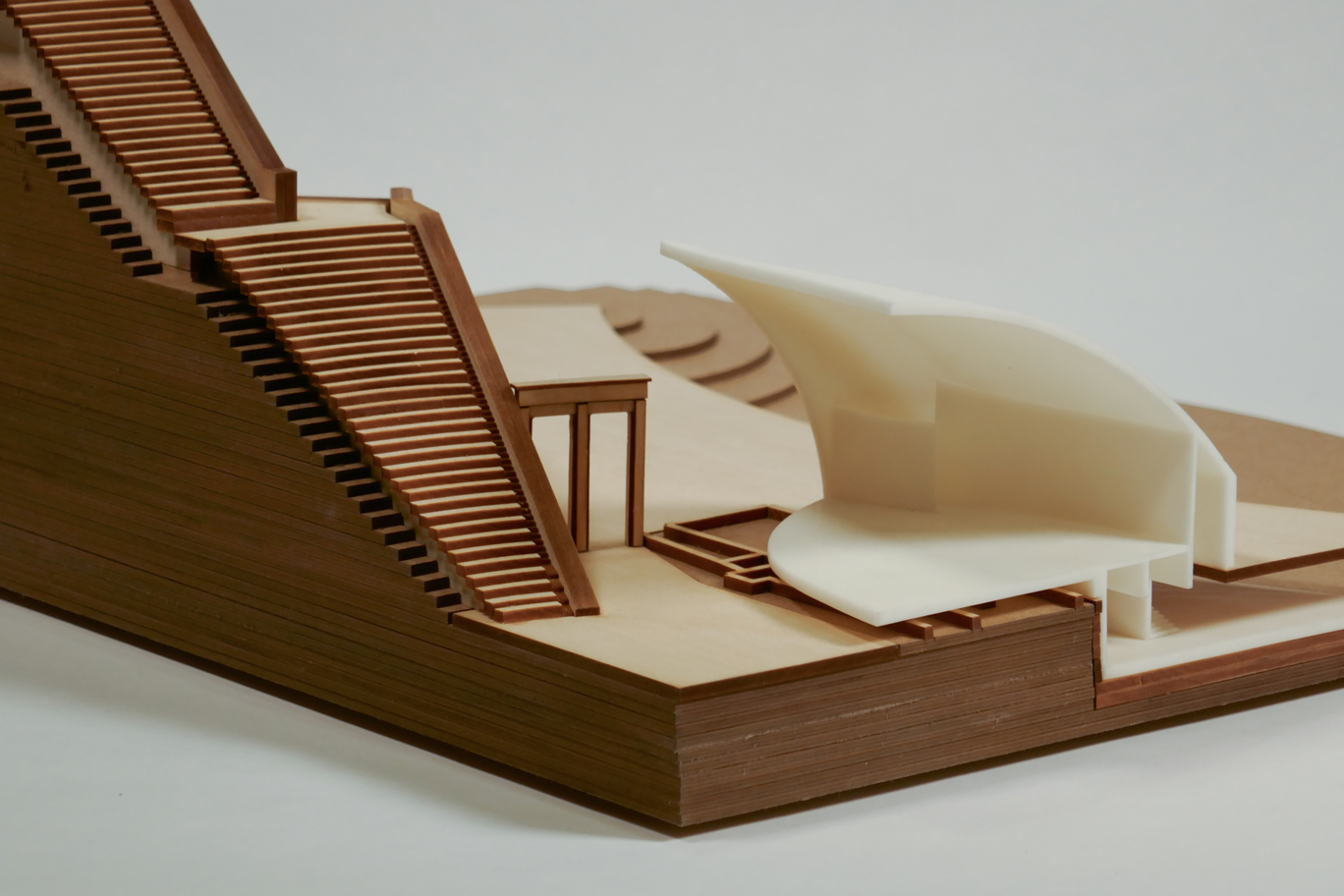
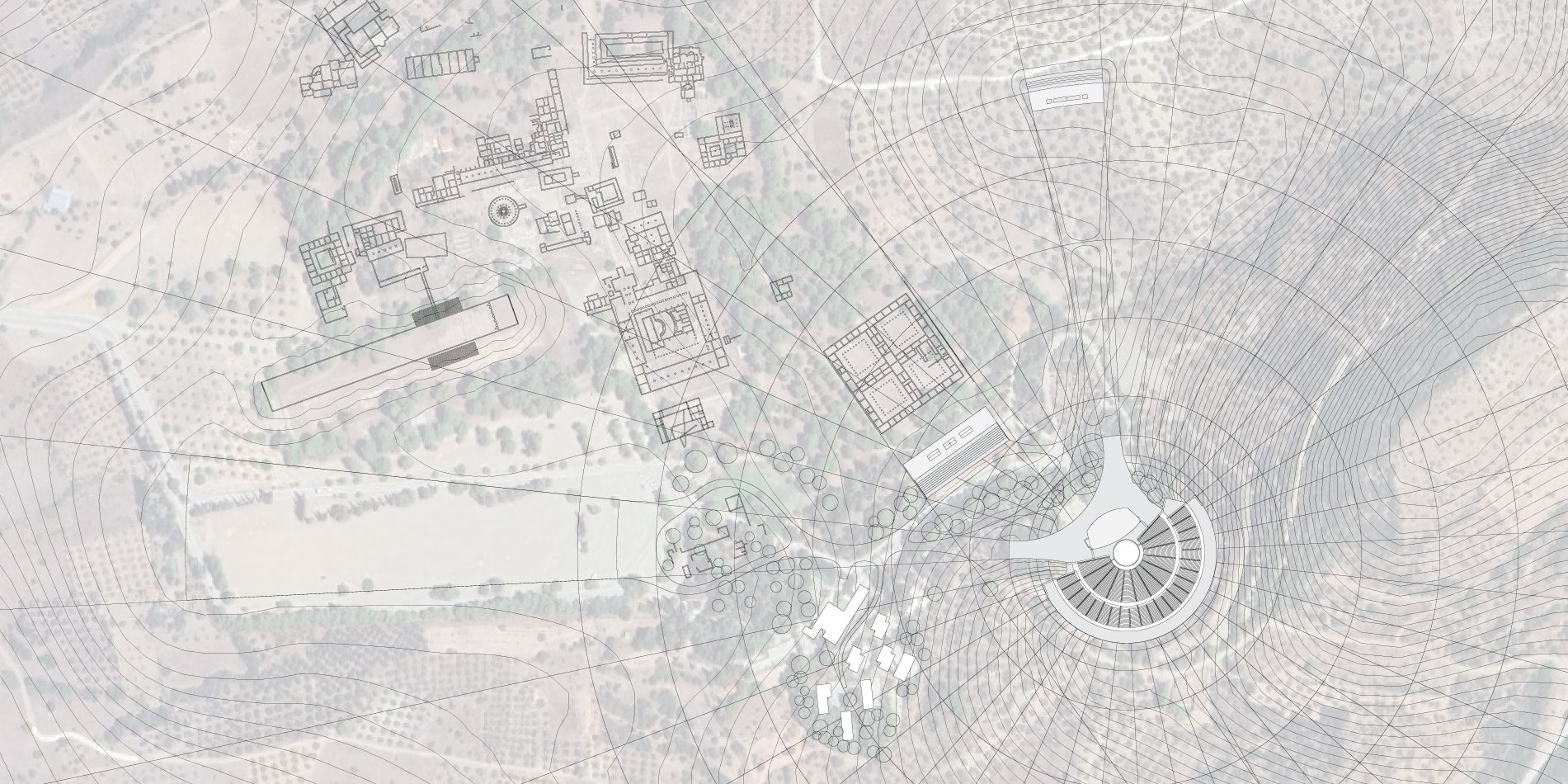
The Shell of Asclepius proposes the revival of the ancient Theater of Epidaurus at the Sanctuary of Asclepius in Epidaurus, Greece, one of the best-preserved Greek amphitheaters, missing only its original stage. The intervention adds a concourse and stage at the theater's base, providing infrastructure for up to 15,000 visitors while preserving the ruins of the original stage and the integrity of the historic venue.
The project extends across the broader Sanctuary with a replacement for the main museum, oriented toward the site's ruins, and a separate museum and hall of fame dedicated to the theater's performance history, sited on a nearby hill facing the theater.
The project extends across the broader Sanctuary with a replacement for the main museum, oriented toward the site's ruins, and a separate museum and hall of fame dedicated to the theater's performance history, sited on a nearby hill facing the theater.